C I V I L    M A R R I A G E    I S    A    C I V I L    R I G H T.

A N D N O W I T ' S T H E L A W O F T H E L A N D.


Showing posts with label Edie Windsor. Show all posts

Tuesday, September 12, 2017

In Memoriam: Edith Windsor, 1929-2017

We have lost a darling lady and champion of the right to marry.  May she rest in peace.

Embed from Getty Images


Embed from Getty Images


Thursday, June 26, 2014

One Year On: Windsor v. United States


Man, oh man. It's been a breathtaking roll down the fast lane since the Supreme Court delivered its historic ruling in Windsor v. United States a year ago today.   At the moment, same-sex marriage is legal in 20 states plus the District of Columbia; in the other 30, plus Puerto Rico, lawsuits are working their way through the courts.  Here's the latest map from Wikipedia of where things stand with the states:


And here's a clip of plaintiff Edie Windsor, the nation's favorite octogenarian lesbian, explaining how she got to the Supreme Court, with a little help from her friends:


Sunday, June 30, 2013

Late-night Thoughts


Five years ago tonight, this blog didn't exist, and same-sex marriage was available in only two states - Massachusetts (which had just revoked its 1913 law barring foreign couples from getting married if the marriage was illegal in their home state) and California, which had started marrying gay couples just six weeks before. A bare handful of other states offered civil unions or domestic partnerships. Gay couples in many places were still going off to Canada to get married, like Edie Windsor and Thea Speyer did.

I think too of all the quiet little commitment ceremonies - already now a dated phrase - that have taken place over the last forty years, all across the nation; usually in some private, secluded spot like a meadow, a beach, or a rented cabin in the woods, with a small group of friends to witness and celebrate. And I think of the many other couples, differently situated, for whom unwitnessed vows and private embraces had to suffice - like my late husband and I.

But what a stunning change in just five years: at midnight tonight, Delaware's new marriage equality law will come into effect, making a total of 12 states and the District of Columbia where gays can tie the knot - totally legal, just like the straights can, plus six more states that offer some kind of civil unions. On August 1st, Rhode Island and Minnesota will also become marriage-equality states, raising the total to 14, containing 30 percent of the U. S. population.

That's Change at a breathtaking speed. This is an historic period we're living through, folks, just like the late 60's/early 70's - as I well recall - when schools were integrating all across the South, and the "White" and "Colored" signs started to disappear. And suddenly, startlingly, there were black news anchors on TV, and female disk jockeys on the radio (that's right, children - there were no women DJ's before about 1972, not in my part of the world - radio was totally a man's business; and TV too, but they at least had the weather girls on some stations).

Of course we get frustrated now, as I'm sure progressive people were frustrated then, living with the day-to-day delays and surmounting the obstacles that remain - but it's all good. The tide is flowing in our direction now, and as Justice Scalia (who, make no mistake, has a brilliant legal mind, even if he is a bigot) said in his dissent this week, given the majority's ruling that marriage discrimination violates the Fifth Amendment, it's only a matter of time before we have marriage rights all across these United States.

For all this I thank, among others, our President, who despite some needless, equivocating foot-dragging, has delivered on DADT and is now making the federal government implement the post-DOMA changes as quickly as possible. Getting ENDA passed would be a great triple-play to cement his legacy as the Equality President, if he and our allies in Congress can get that done before his term ends. But just think, guys - how much of the last five years would have happened if McCain was president? Or Romney? Or, God help us all, Palin? What a chilling thought.

I still think it could be 2030 before the Deep South accepts the change - and here I mean the great red swath from Texas to South Carolina, which is the most conservative and most religious and most hell-no region in the country. The struggles will be fierce; there could even be scattered acts of violence and open rebellion. But in the next twenty years Change will come to my homeland too - if for no other reason than that the demographics make it certain. For example, whites in Texas are already only 48% of the population; in twenty years, Latinos will be over 50% and whites only 35%. Then too, the diehard, anti-gay, over-60 Bible-thumpers will be dying off.

Well I'm glad I have lived to see this much change in my lifetime. For me personally, nothing much actually changes out here on the prairie, but I do rejoice at the thought of the wonderful difference it all makes in the lives of others, whose pictures I've posted here on the Blue Truck, and for the generations yet unborn, who will take their freedom and equality for granted - and yawn over the history books, and wonder what was all the fuss about?

And won't that be fabulous.

Change you can believe in:
Edie Windsor as Grand Marshall in today's NYC Pride Parade.
When her car turned onto Christopher Street, the crowds roared,
"EDIE!  EDIE!  EDIE!"


Wednesday, June 26, 2013

DOMA OVERTURNED, MARRIAGE RETURNING TO CALIFORNIA


Bless God, I have lived to see this day.

The Supreme Court this morning overturned Section 3 of DOMA in a 5-4 vote as being an unconstitutional violation of due process and equal protection - meaning the federal government has to recognize same-sex marriage in those states where it is legal; text of the ruling is here. Commentary from SCOTUSblog editors:
In response to some questions about Windsor: Only Section 3 of the Defense of Marriage Act -- which defines the words "marriage" and "spouse," for federal purposes, as referring only to marriages between opposite-sex couples -- has been struck down. Consequently, any federal statute that refers to a "marriage" or a "spouse" should be interpreted as applying with equal force to same-sex married couples.

The federal Defense of Marriage Act defines "marriage," for purposes of over a thousand federal laws and programs, as a union between a man and a woman only. Today the Court ruled, by a vote of five to four, in an opinion by Justice Kennedy, that the law is unconstitutional. The Court explained that the states have long had the responsibility of regulating and defining marriage, and some states have opted to allow same-sex couples to marry to give them the protection and dignity associated with marriage. By denying recognition to same-sex couples who are legally married, federal law discriminates against them to express disapproval of state-sanctioned same-sex marriage. This decision means that same-sex couples who are legally married must now be treated the same under federal law as married opposite-sex couples.

The Court also in a roundabout way sent Prop 8 to the garbage can, also by a 5-4 vote; text of the ruling is here.  Comment from Amy Howe at Scotusblog:

Here's a Plain English take on Hollingsworth v. Perry, the challenge to the constitutionality of California's Proposition 8, which bans same-sex marriage: After the two same-sex couples filed their challenge to Proposition 8 in federal court in California, the California government officials who would normally have defended the law in court, declined to do so. So the proponents of Proposition 8 stepped in to defend the law, and the California Supreme Court (in response to a request by the lower court) ruled that they could do so under state law. But today the Supreme Court held that the proponents do not have the legal right to defend the law in court. As a result, it held, the decision by the U.S. Court of Appeals for the Ninth Circuit, the intermediate appellate court, has no legal force, and it sent the case back to that court with instructions for it to dismiss the case.

Photos of plaintiff Edie Windsor, at the home of her attorney in New York City, as she heard that she won her case this morning, in the New Yorker.

Report on the rulings from NBC News, with some jubilant crowd reactions in the background:


Visit NBCNews.com for breaking news, world news, and news about the economy
Update, 12 noon:  The ACLU has issued a FAQ on "Marriage for Same-Sex Couples in California," discussing the implications of the Court's ruling on Prop 8; a couple of notable excerpts:
A few final, legal steps must be completed before same-sex couples can once again marry in California, which should take only about a month. First, the Supreme Court’s ruling must become final, which will happen 25 days after the ruling. Under the Supreme Court’s rules, the party who loses a case has a right to ask the Court to re-hear the case within 25 days of the decision’s release. Petitions for re-hearing are very rarely granted, so it is unlikely that anything will change during this 25 days. Once the ruling is final, the Ninth Circuit will issue a “mandate” that will send the case back to the District Court. When the mandate is issued, the injunction against the enforcement of Prop 8 will take effect, and same-sex couples in California will once again have the freedom to marry. We expect that the State of California will issue guidance to all County Clerk offices in the state about when the decision becomes final and when those offices must resume issuing licenses on an equal basis to same-sex couples. Please note that couples should wait until the Supreme Court ruling is final and the Ninth Circuit issues a mandate to the District Court before attempting to obtain a marriage license or to marry, to ensure that your marriage is valid. . . .
Yes. The legal order (or injunction) that stops the State of California from enforcing Prop 8 applies to state officials throughout the state. This means that Prop 8 cannot be enforced anywhere in the state. There may be efforts to try to limit the effect of the injunction to apply to only some parts of the State but we strongly believe that those efforts are futile and will not succeed. . . .
If you live in another state and get married in California you will be legally married. However, depending on where you live, your home state may not respect your marriage. The Supreme Court’s ruling in United States v. Windsor striking down Section 3 of DOMA concerns only the federal government’s treatment of marriages. The ruling does not require states to recognize a valid marriage of a same-sex couple performed in another state. Thus, if you marry in California but live elsewhere, it is still possible that your home state will not recognize your marriage.
Update, 12:30 p.m.: In California, Governor Jerry Brown has issued the following statement:
After years of struggle, the U.S. Supreme Court today has made same-sex marriage a reality in California. In light of the decision, I have directed the California Department of Public Health to advise the state’s counties that they must begin issuing marriage licenses to same-sex couples in California as soon as the Ninth Circuit confirms the stay is lifted.
Update, 12:45 p.m.: At the Pentagon, Secretary of Defense Chuck Hagel has issued this statement:
The Department of Defense intends to make the same benefits available to all military spouses -- regardless of sexual orientation -- as soon as possible. That is now the law, and it is the right thing to do. The department will immediately begin the process of implementing the Supreme Court's decision in consultation with the Department of Justice and other executive branch agencies.
Update, 1:00 p.m.: From aboard Air Force One en route to Africa, President Obama has issued the following statement:
I applaud the Supreme Court’s decision to strike down the Defense of Marriage Act. This was discrimination enshrined in law. It treated loving, committed gay and lesbian couples as a separate and lesser class of people. The Supreme Court has righted that wrong, and our country is better off for it. We are a people who declared that we are all created equal - and the love we commit to one another must be equal as well.
This ruling is a victory for couples who have long fought for equal treatment under the law; for children whose parents’ marriages will now be recognized, rightly, as legitimate; for families that, at long last, will get the respect and protection they deserve; and for friends and supporters who have wanted nothing more than to see their loved ones treated fairly and have worked hard to persuade their nation to change for the better.
So we welcome today’s decision, and I’ve directed the Attorney General to work with other members of my Cabinet to review all relevant federal statutes to ensure this decision, including its implications for Federal benefits and obligations, is implemented swiftly and smoothly.
On an issue as sensitive as this, knowing that Americans hold a wide range of views based on deeply held beliefs, maintaining our nation’s commitment to religious freedom is also vital. How religious institutions define and consecrate marriage has always been up to those institutions. Nothing about this decision - which applies only to civil marriages - changes that.
The laws of our land are catching up to the fundamental truth that millions of Americans hold in our hearts: when all Americans are treated as equal, no matter who they are or whom they love, we are all more free.
And in New York City, Edie Windsor, plaintiff in the DOMA case, had this to say, according to the Washington Post:
After learning of the Supreme Court ruling, Windsor broke into tears. “If I had to survive Thea, what a glorious way to do it, and she would be so pleased,” she said at a news conference. She thanked her lawyers and her allies, gay and straight: “We won all the way, so thank you from the bottom of my heart.”
Asked what Spyer would say to her if she were alive, Windsor replied, “‘You did it, honey.’”
And that's about as far as your Head Trucker can go today, I have to get some sleep now.  But I'll have more reactions and analyses in my next post, sometime tonight.
 
Odd sensation, looking out my window at the green grass and the rose bushes and the sycamore tree and corners of the blue summer sky above:  all is just as it was yesterday and all the days before, yet now there's something different about this plot of ground I live on, this green earth, this land of ours.  A quick, sly thought whistles up from my heart to my eyes:  we belong here, we are kindred, we are of the tribe - we are truly, fully Americans, and strangers no more. 
 
We belong.  And that makes all the difference.  

Just one more:

Saturday, March 30, 2013

Popcorn and a Movie: Part II


Did you enjoy yourself at intermisson, guys?  Now that everyone's back in their seats, I'll continue with the discussion - which is as much to summarize and clarify what I know for my own benefit as for anyone else's.  Once again, I'm not a legal expert, just a highly interested observer of these things from afar.

(If you do want to hear a legal expert's opinion on these cases, read the excellent analysis by David Cole, Professor of Law at Georgetown University.  But he won't give you any popcorn or free movies, like me.)

Well, to pick up from Thursday's post, there are a number of ways the Supreme Court could decide the Prop 8 case, depending on which one can get at least five votes. Marty Lederman at SCOTUSblog analyzes at least seven possible rulings.
  1. reversal on the merits, upholding Proposition 8 as being constitutional, not discriminatory against gays and lesbians;
  2. dismissal of the Proposition 8 sponsors’ petition for lack of appellate standing (leaving the ruling of U.S. district judge Vaughn Walker intact and thus returning same-sex marriage to California immediately, if not sooner);
  3. dismissal of the petition as improvidently granted by the Supreme Court – a “DIG” (same result as above); or
  4. overturning of the court of appeals’ decision (which upheld what Judge Walker ruled) and sending the case back to the Ninth Circuit for reconsideration in light of whatever the Court does in Windsor, the DOMA case.
and three different ways of striking down Proposition 8, in line with Judge Walker's findings of fact that it does discriminate against gays and lesbians for no good reason:
  1. a ruling that applies only to California;
  2. a ruling that would guarantee same-sex marriage in the eight states that already offer all the benefits and other incidents of marriage (i.e., most civil unions and some domestic partnerships); or
  3. a sweeping ruling that would provide a constitutional right to same-sex marriage nationwide.
After a good bit of argument and analysis, he sees the dismissal on standing grounds or an “eight-state” ruling on the merits as being the most likely outcomes.  He doesn't see a reversal on the merits, or a nationwide ruling, as being within the realm of possibilities for the Court at this time.  I'll leave it up to you guys to go read his analysis and see if you agree.

Many commentators I've read this week do seem to think that, having considered the cases back to back, the DOMA ruling will likely have a major effect on how the high court decides the Prop 8 case.  So let's turn to that now.

Continued after the jump . . .

Wednesday, March 27, 2013

United States v. Windsor: Arguments and Analysis

Edie Windsor arrives at the Supreme Court this morning,
accompanied by her attorney, Roberta Kaplan.

Here is the audio file of this morning's hearing on the DOMA case:

The transcript is here (PDF, 698 kb).

Analysis: 

1.  Lyle Denniston, SCOTUSblog reporter: "Argument Recap: DOMA is in Trouble."

2. Amy Howe, Editor of SCOTUSblog: "DOMA as a States' Rights Problem? Today's Oral Argument in Plain English."

3. Tom Goldstein, Publisher of SCOTUSblog: "The Relationship between DOMA and Proposition 8."

4. Jacob Combs, Equality on Trial: "Supreme Court Likely to Strike Down DOMA: Here's Why."

5. Jacob Combs, "An In-depth Look at Questions of Standing and Jurisdiction."

6. Jacob Combs, "An In-depth Look at Questions on the Law's Merits."

Opinion:

7. Ezra Klein, The Washington Post: "Sorry, Justice Scalia: There's no evidence that gays aren't great parents."

For findings of fact on this matter, see In re: Gill, which was beautifully decided by a Florida court, ending three decades of prohibition on gay adoptions (which was begun at the instigation of Anita Bryant's notorious anti-gay-rights campaign in the 70's).

8. Jeffrey Toobin, The New Yorker: "Why the Gay-Marriage Fight Is Over."

9. Amy Davidson, The New Yorker: "The Skim Milk in Edith Windsor's Marriage."

10. Victoria A. Brownworth, The Advocate: "The Bigotry Isn't Over."


And after leaving the courtroom this morning, Edie Windsor tells us the Magic Word:


What a sweetheart, huh fellas?  BTW, she's been selected as a Grand Marshall of the NYC Pride Parade this summer.

Update, 3:32 p.m., Texas time: Now fellas, I have just listened to the tape and read along in the transcript, all the way from start to finish, which took two solid hours. And though I'm not an attorney and claim no special legal insight, I was impressed by what I read and heard. Of course, this is not, and was never intended to be, a full, complete discussion on the merits of same-sex marriage; that's not what a Supreme Court appeal is all about. Usually, the Court is asked whether the lower court or courts decided an issue correctly - it's in the lower courts where all the multitudinous details are threshed out and argued over.

Continued after the jump . . .

Thoughts in the Interlude

While we await this morning's Supreme Court hearing on the DOMA case, United States v. Windsor, here's some incidentally related things to refresh your mind with.

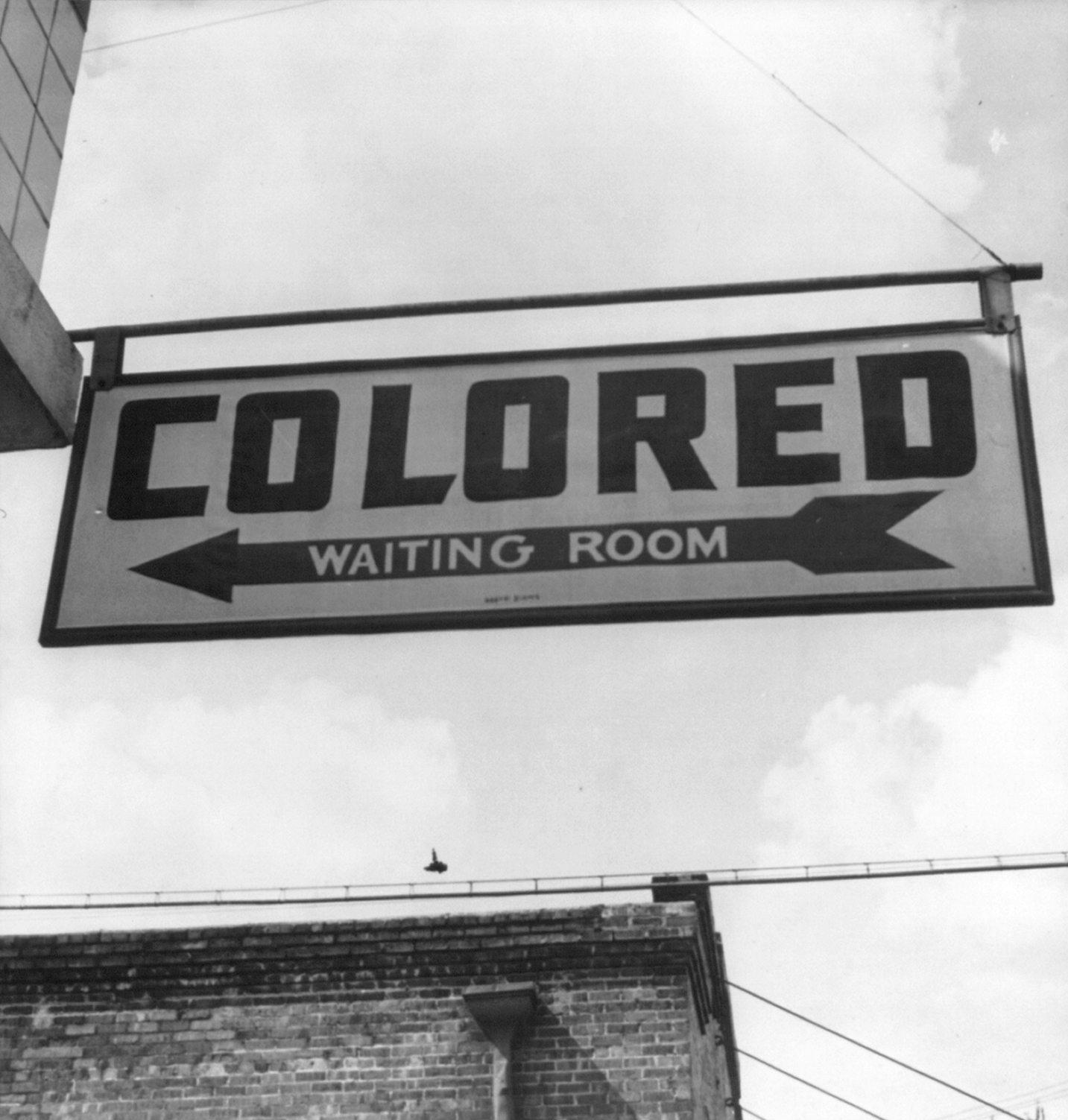
Your Head Trucker remembers seeing many signs like
this one in the legally segregated South of his childhood.
Little did he suspect that as a gay man, he would spend
most of his adult life shoved aside in just such a waiting room.

  • Everyone has heard of the landmark Supreme Court ruling in Brown v. Board, 1954. But have you ever studied it? Do you know what pro and con arguments were used at that time about racial segregation, or what reasoning the Court used in ruling it unconstitutional? Just as we saw in yesterday's hearing on the Prop 8 case, the justices were not of one mind, and had to work their way through a swamp of legal and constitutional entanglements, and considerations of original intent of the Fourteenth Amendment about equal protection and due process, in order to reach a decision - so in that sense, Brown is highly relevant reading for us today. If you like, here's the Wikipedia article, with lots of links to primary sources, as well as the actual ruling of the court. And also revealing of the mixed mood of the times, read Governor Leroy Collins's courageous refusal to sign and remarks at the end of the Florida Legislature's Resolution of Interposition, 1957, which declared (unsuccessfully) the Supreme Court's desegration order "null, void and of no force or effect in Florida."


  • The more I think about Justice Alito's lame-brained demand for "scientific evidence" that gay marriage is not harmful to society, and Justice Scalia's assoholic demand to be told "when the Constitution changed" - the more my blood boils.  But do read this sweet, cooling essay by a proud daughter:  "What Makes a Family."  Excerpt:
Two gay, Catholic Jesuit psychologists raising a multiracial daughter in San Francisco: it sounds like Hollywood’s next sitcom, but in many ways my life is just like yours. When the Supreme Court hears oral arguments next week on marriage equality, I want the country to know the love that exists in families like mine, and how my upbringing is in many ways an American success story. . . .

Monday, March 25, 2013

Ringside at History

The Supreme Court of the United States:
Top row (left to right): Associate Justice Sonia Sotomayor, Associate Justice Stephen G. Breyer, Associate Justice Samuel A. Alito, and Associate Justice Elena Kagan. Bottom row (left to right): Associate Justice Clarence Thomas, Associate Justice Antonin Scalia, Chief Justice John G. Roberts, Associate Justice Anthony Kennedy, and Associate Justice Ruth Bader Ginsburg.

Tomorrow, the Supreme Court hears oral arguments on the Prop 8 case (originally known as Perry v. Schwarzenegger, then as Perry v. Brown, now called Hollingsworth v. Perry), which has been coordinated for the good guys by the American Foundation for Equal Rights. Matt Baume provides the voice-over for this summary of AFER's efforts:


SCOTUSblog has a summary "In Plain English" of the legal issues involved with the case here, if you want to read it.

On Wednesday, the high court will hear arguments in the DOMA case, United States v. Windsor.

It's worth noting two things: first, that the Supremes don't have to hear any case that's appealed to them; they pick and choose the ones they want. And second, broadly speaking, the Prop 8 case deals with state issues surrounding same-sex marriage, while the DOMA case deals with federal issues. So in choosing to hear these two particular cases out of the dozen or more other same-sex marriage cases that have also been appealed to the court in the past year, the justices would seem ready to make a clean, sweeping ruling, or combined rulings, to cover the whole spectrum of legal issues concerning same-sex marriage in this country. Or that's how it seems to me, but what do I know.

However, the justices have also specifically asked in both cases that the issue of legal standing be addressed, which is a technical thing that might, or might not, give the court some wiggle room not to make any sweeping rulings at all. So we just have to wait and see, because the bottom line is - the court could go either way, and I'm not expecting gay marriage will be legal all over the country anytime soon.

However, given the breathtaking speed of changing attitudes in this country towards same-sex marriage, it seems highly unlikely to your Head Trucker that the court will avoid ruling in our favor, at least to some extent. As I said when the cases were accepted by the court, my intuition tells me that the court will certainly legalize gay marriage in California, at the very least, and will also declare that the federal government has to recognize same-sex marriage in those states where it is allowed.

Beyond that, who knows? Rulings are not expected to be delivered until sometime in June, so we'll have to wait and see. But what an exciting moment in history - especially for those of us who remember what the world was like before Stonewall.


Friday, December 7, 2012

Marriage Equality Updates, 12/7/12

Sometimes it seems like Change is as slow as Christmas; but then other times, it seems like it's bustin' out all over. A few news notes to show you what I mean.

Same-sex couples began getting marriage licenses yesterday in the Evergreen State. A headline in Towleroad says, "These Men Are Officially, Wonderfully, the Face of Marriage Equality in Washington State":

Larry Duncan, 56, and Randy Shepherd, 48, partners for eleven years,
apply for their marriage license in Seattle on Thursday.

Hooray! Finally, some real middle-aged gay guys, not stereotyped twinklets in sequins. Your Head Trucker can totally relate. Especially since my beard is now nearly as white and as long as the older dude's is. Yeah, really.

Of course, lots of other queer couples are flocking to the altar, or at least to the courthouse, in Washington - including Dan Savage and his longtime "husband in Canada, boyfriend in America" Terry Miller. The state requires a three-day waiting period, so weddings won't happen until Sunday.

In Mexico, on Wednesday of this week the Mexican Supreme Court struck down a law against same-sex marriage in the state of Oaxaca, which may lead to marriage equality nationwide soon. Since 2010, Mexican couples have already been able to get married in Mexico City. A more detailed analysis of the meaning of the ruling is here.

At the same link as above, lawmakers in Colombia, Chile, and Uruguay are all set to debate marriage equality next week.

Maryland began issuing marriage licenses to same-sex couples yesterday, although weddings won't begin until January 1.

And in Virginia, NPR reports that the CIA for the first time is actively looking to recruit gay and lesbian employees.

And in Washington D.C., the Supreme Court may - or may not - announce today which of the same-sex marriage cases it will consider. As I noted last week, if the Court declines to review the Prop 8 case, which has been upheld in our favor by a federal district court and a federal appeals court already, marriages could resume very quickly in California. So stay tuned.


Update, 12/8, 5 a.m.: Okay, so I'm not on the same sleep schedule as the rest of the world. But I've just learned that the Supreme Court has decided to review both the Prop 8 case and the Windsor case. The Washington Blade reports:
Ending months of anticipation, the U.S. Supreme Court signaled on Friday it would take up litigation challenging California’s Proposition 8 and one case challenging the Defense of Marriage Act.

Justices decided to take up the case of Hollingsworth v. Perry, which seeks to overturn the state constitutional amendment California voters passed in 2008 that took away marriage rights for same-sex couples.

They also decided to take up Windsor v. United States, litigation challenging the constitutionality of the Defense of Marriage Act. That lawsuit was filed by Edith Windsor, a New York widow who was forced to pay $363,000 in estate taxes in 2009 upon the death of her spouse, Thea Spyer.

The court made the news in an orders list published Friday following a conference the justices held on the same day. Four justices must vote affirmatively to grant a writ of certiorari in any particular case, but that vote isn’t public information.

Windsor, 83, expressed excitement in a statement that her lawsuit would be the one to challenge DOMA at the Supreme Court. Her lawsuit was filed by the American Civil Liberties Union along with Paul, Weiss, Rifkind, Wharton & Garrison LLP and other groups.

“When Thea and I met nearly 50 years ago, we never could have dreamed that the story of our life together would be before the Supreme Court as an example of why gay married couples should be treated equally, and not like second-class citizens,” Windsor said. “While Thea is no longer alive, I know how proud she would have been to see this day. The truth is, I never expected any less from my country.”

More analysis and commentary, if you want to read it:

"Today at the Supreme Court - Explained" from Lambda Legal

"Supreme Court to Hear Two Challenges to Gay Marriage" from the New York Times

"Prop 8 Attorneys Confident SCOTUS Will Strike Down Marriage Ban" from the Washington Blade

"Same-sex Marriage in the Courts" from the Pew Forum on Religion and Public Life

"Supreme Court Will Hear DOMA and Prop 8 Challenges:  An Analysis" at Towleroad


What I say: Your Head Trucker has no crystal ball, but it seems most likely that when the Supremes finally rule on these cases, sometime between now and when the court term ends next June, that

1) it will concur in striking down Prop 8, letting marriages resume in California, but not applying that to any other state;

2) it will say that if a state says you're married under its laws, the feds have to recognize that marriage for all federal rights and benefits, just as with any other married couple across the land; but

3) the Court will not say that other states have to recognize your marriage if they don't want to. The polls may show a slight majority of Americans are now in favor of the idea, but the Supremes rarely jump very far ahead of public opinion. It's just too early, I think, for a nationwide ruling to the right to marry in every state:  I don't expect that it another 15 years, at least.

Of course, I hope I'm wrong about that last bit. We'll find out by the time it's beach weather next year.  My God, and I remember when "homosexual" was practically an unmentionable word in public.  Now the Supreme Court is going to deliberate on our right to marry.  How times have changed.

Friday, August 24, 2012

Why Marriage Matters

An update on the Edie Windsor case, which I've blogged about on the Blue Truck before - and which is now headed for the Supreme Court, along with a bunch of other DOMA cases, this fall.


And meet the Hendersons - an Air Force married couple in Iowa who talk about the distress and difficulties DOMA causes for them:


Saturday, June 9, 2012

This Week in Marriage News


This week, three steps forward and two steps back for marriage equality:

Another Federal appeals court found section 3 of DOMA unconstitutional, in the Edie Windsor case I've blogged about before. Here's Edie thanking her supporters:


Also, in the Perry v. Brown case, the federal Ninth Circuit appeals court turned down a request by anti-gay proponents to have the case reheard by the full 11-member court; a three-member panel in February of this year upheld the finding of a lower federal court that California's Prop 8, which in 2008 took away from gays and lesbians the right to marry in that state, was unconstitutional.  The anti-gay side has 90 days in which to appeal the case to the U. S. Supreme Court.

And in far-away Denmark, the first country in the world to authorize same-sex registered partnerships back in 1989, their parliament has voted 85-24 to enact same-sex marriage, which will begin on June 15.

Elsewhere, though, the struggle goes on: in both Maryland and Washington state, anti-gay forces have submitted enough signatures to subject those states' recently-enacted equal-marriage laws to referendums in November.  In no state so far have voters ever approved same-sex marriage.

But hey, there's got to be a first time somewhere, right?  So we'll keep our fingers crossed.

But consider this New Yorker piece that discusses the ramifications of the marriage struggle on the presidential election, and vice-versa.

Sunday, September 4, 2011

A Very Long Engagement


On Netflix last night I came across a great documentary you fellas would probably like as much as I did.  Edie & Thea:  A Very Long Engagement is a love story spanning nearly half a century that does end happily ever after - what I suppose we all wish for but not all of us find.  Very well-told too, with lots of anecdotes and snapshots from across the decades.

The couple married in Toronto in 2007; but after Thea died in 2009, the feds hit her widow with a $363,000 tax bill on the proceeds of Thea's estate - relying on the Defense of Marriage Act -  a tax which straight married couples are exempt from.  Do you hear me, guys?  Whiny little pinheads who write articles about "Oh, the government should just get out of the marriage business," etc., are not dealing with the realities of life.  Marriage matters, a hell of a lot - in this and all kinds of ways.


Do you realize that no matter how long you have been together, if your partner dies without a proper will, you have no right to anything he owned?  Not so much as a teacup or a shirt button.  His parents or sibs or children can walk right into your house and haul everything away, and if the place was in his name, they can change the locks on the doors, set your ass right on the street - and not a fucking thing you can do about it.

And even if he did make a will and leave you something - be it a house, a car, money in the bank, whatever - because you are not legally married, all of that is counted as income to you, and subject to ordinary income tax just like your paycheck.  If your partner is killed in an accident or a crime, you can't sue the guilty party for damages.  In most states, if your partner was a schoolteacher or civil service worker, you can't collect from his state pension, nor can you always count on pension benefits from private employers, either.  And you certainly can't collect his Social Security or veteran's benefits.  Yet.

Now Edie is suing the feds for discrimination; Obama's Justice Department last February announced it would no longer defend DOMA in court, calling it unconstitutional.  So the Bipartisan Legal Advisory Group, a creation of House Republicans, is pressing on with the defense in this case.   The way the court rules will no doubt set a big precedent for future same-sex marriage cases on the federal level.

In the meantime, go watch Edie & Thea, which was filmed before Thea died.  A really great love story.  And yes, you will need a few kleenex before it's over.

Related Posts with Thumbnails