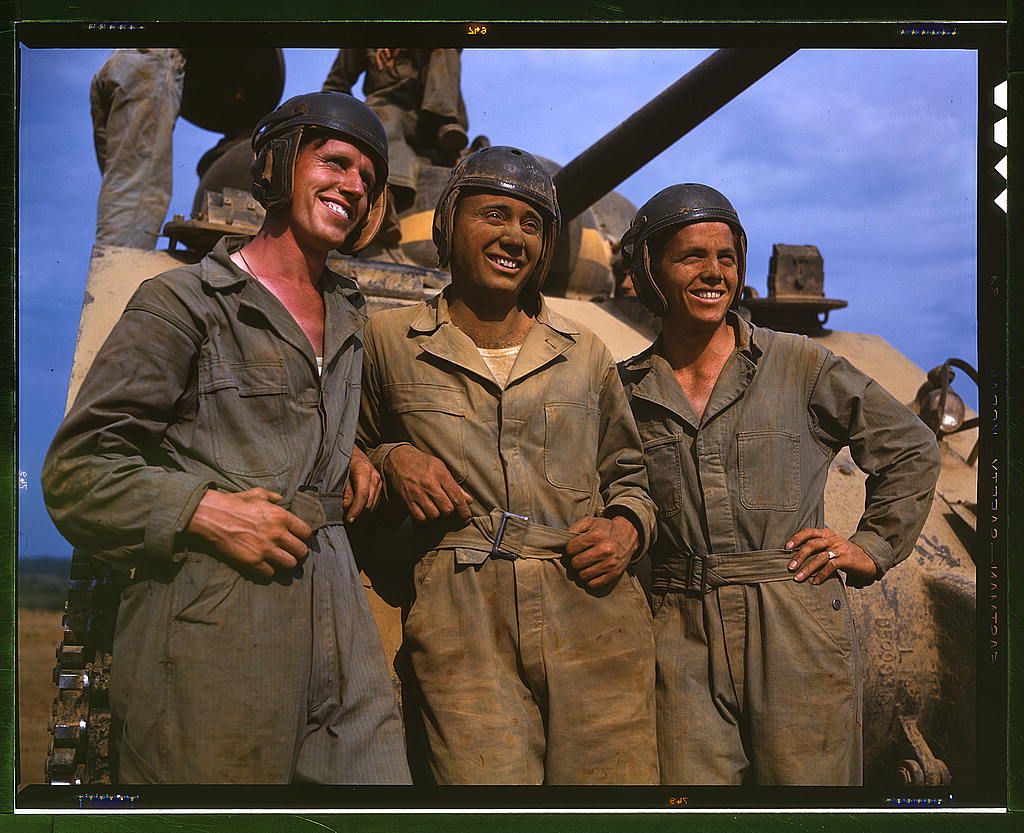
Fascinating artifacts from the the Smithsonian Institution trace the stories of gay Americans, famous and obscure, from the 1800s till today in this 2024 documentary. It's fairly good, though as is so often the case with such broad summaries, it sometimes glamorizes and dramatizes a bit more than is necessary - but worth watching anyway.
We've come a long way, baby; I just hope I don't live to see the pendulum swing back the other way. But it can and does sometimes, as history has shown many times in many places.
It bugs me when people talk about being on "the right side of history" - that's a misnomer. What they really mean is the right side of the future; but the future is unknown and unknowable. It hasn't happened yet. And there are no guarantees in this universe.
All we can ever know for sure is this little stepping-stone of time we live in - the present. So make the best of it.
The late historian David McCullough (1933-2022), renowned author of presidential biographies and other best-selling books, discusses American ideas and ideals - and then-president Trump - with interviewer Charlie Rose in 2017. One cannot understand the present without understanding the past.
This interview is well worth your time. McCullough is easy to listen to, and his voice may sound familiar. He has has narrated many Ken Burns miniseries and other PBS documentaries.
Official portrait of President Truman by Greta Kempton, 1947. Click to enlarge.
I am so disgusted with all that is going on in our country and in the rest of the world now that I can't stomach the news anymore. A couple of times a week, I run my eye over the headlines on the news feed, ditto the headlines on Joe.My.God., but I don't want the details. I see the abyss opening wide ahead of us, and I can't bear to think of what may come. Of course, I have no crystal ball, and things may yet get better instead of worse; but having a long view of human history, and knowing how mighty states have often fallen from greatness into ruin -- well, it's best not to fill my mind with dread of things I cannot prevent or control.
The Farm Journal, May 1916
I find comfort in my faith, and in revisiting the brighter spots in history. Harry Truman was one of them, and I offer this video summary of his life in the Oval Office as a reminder of what a president can and should be. His small-town upbringing was the source of his virtues as well as his shortcomings; but by God, he had the right stuff, never waivering in his faith in American democracy and his respect for the inherent worth of the common people. That was a true man, a strong man, and a good man. One of the greats.
If you find this video refreshing, I heartily recommend the definitive biography, entitled Truman, by the late historian David McCullough. There is an audiobook version on YouTube (slow the speed down to about 75%) that makes for fascinating listening - though you can start in the middle, if you like, with Truman's sudden elevation to the presidency on the death of FDR in April, 1945, a few weeks before Germany surrendered. The job just got rougher and tougher from there on out, but Truman plowed right on, true to his lights, keeping the country and the world on course for peace and prosperity, doing an astoundingly fine job that would have broken many a lesser man. That's why ever since he left office in January 1953, he has consistently been ranked in the top ten of American presidents.
The video opens with Truman thanking his hometown neighbors for the rapturous welcome they gave him when he returned to Independence, Missouri, after leaving the White House for the last time. Enjoy.
On a personal note, it's odd to realize I am older now than FDR was when he died, and older than Truman was when he left office. Where does the time go?
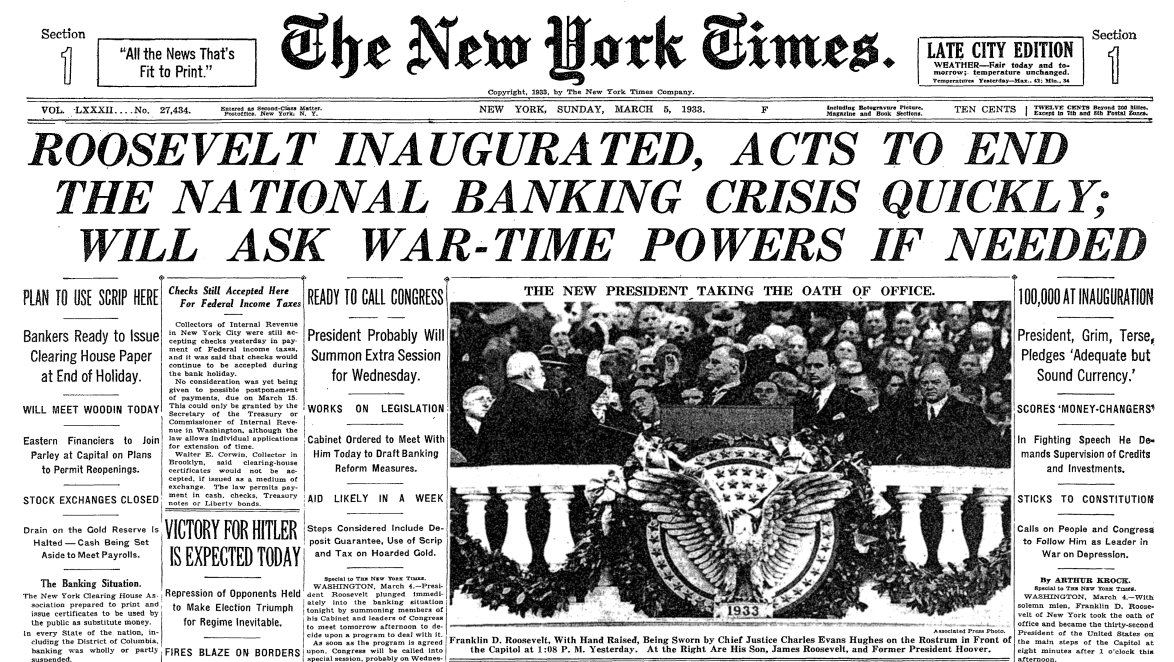
I have seen nothing mentioned about this in the news media, so I'm posting for the record: this past Saturday, March 4th, was the 90th anniversary of President Franklin D. Roosevelt's first inauguration in 1933, at the height of the Great Depression. The first 100 days that followed were a great turning point in our history, as FDR and a newly elected Democratic majority in both houses of Congress kick-started the New Deal, providing relief and hope to the nation.
By a strange coincidence, Adolf Hitler had come to power in Germany just a few weeks earlier; both men had a rendezvous with destiny, as yet unforeseen.
FDR's decisive actions and his compassionate, optimistic, encouraging fireside chats over the new-fangled radio system made a profound impression on many millions of Americans that was still vividly remembered by my parents and grandparents a generation later, when I came along. As my little grandmother said, in her homely way, "If it hadn't-a been for Roosevelt, we'd have all perished to death."
His predecessor, the Republican Herbert Hoover, was a decent, highly intelligent man who had engineered food relief for starving European nations in the aftermath of World War I; but Hoover failed the test of history when it came to helping his own fellow citizens stricken by the Depression. Then as now, upscale Republicans balked at providing any concrete help to the poor and needy, putting their own profits and pocketbooks first. Ninety years later, we see that the more things change, the more they stay the same.
Here is Part I of a very well-made documentary shown on the History Channel in 2005, covering Roosevelt's presidency from his first inauguration down to the beginning of World War II. I've watched it several times, and recommend it to my truckbuddies. I don't know where Part II is; I can't find it on YouTube.
P. S. - Since the first of the year, on sunny days I've been taking little walks around the neighborhood, which is in the older part of town. One day I noticed an impression in the concrete sidewalk:
I'm sure my truckbuddies of a certain age will remember fondly, as I do, the folksy, fascinating reports of CBS newsman Charles Kuralt (1934-1997) from his travels across the highways and byways of America, delivered with an ear for poetry and an eye for natural artistry.
This 1989 compilation explores a number of interlacing threads in the magnificent tapestry of American history - a story, like all human stories, of highs and lows, light and shadow, sinners and saints. Sadly, it cannot be told in this way today. All history must now be cut to fit the latest pattern of right or left - and shouted, not said.
So enjoy this before it disappears down the memory hole.
David McCullough, author and popular historian, died last Sunday at age 89. He was a fine writer and a fine American; his biographies of Harry Truman (1992) and of John Adams (2001) won the Pulitzer Prize, and he was the recipient of many other honors and awards during his long career. A perspicacious man of wide learning, good humor, and grace, in all his works he kept a spotlight on the American experiment in democracy: an experiment he, like the people he wrote about, always believed was worthwhile, enduring, and noble.
McCullough also had a wonderful baritone voice, which many of us even now remember from his narration of the Ken Burns documentary The Civil War, first shown on PBS in 1990, a masterpiece of filmmaking. It should be required viewing for every schoolchild, and indeed, for every American. If you haven't seen it, you should.
I also highly recommend his biography of the 33rd president, entitled simply Truman, which is a masterpiece of biography. The chapter on Truman's whistlestop campaign for re-election in 1948, leading to a surprising upset victory over Thomas Dewey, his Republican opponent, is particularly vivid and engrossing.
McCullough may be the last of his breed: neither a crusader nor a revisionist, but in essence simply a good storyteller with a fine mind, profound respect for the truth, and a keen instinct for the telling detail. The American mind has been so dumbed-down in recent decades, and hamstrung by propagandists both left and right, that it is difficult to imagine there is any future in history-writing at all.
Especially when, as I have heard, there will soon be machines to write anything and everything, in any genre, any style, any viewpoint you please - what then will be the point of knowing any history - indeed, of knowing anything at all?
Here is McCullough interviewed by Morley Safer on 60 Minutes in 2013:
And what is the American character? Renowned historian David McCullough answers those questions in this six-minute interview from 2017, which is highly pertinent to the present moment.
Your Head Trucker has always been something of an antiquarian, but since arriving on the shady side of 60, he feels more and more the impelling current of Time, carrying us onward as leaves on a river: the irresistible, inescapable force moving men and civilizations from birth to maturity to death, driving us relentlessly from age to age and change to change, whether we would or not.
And in our great technological civilization, yesterday's marvels are always becoming today's mere commonplaces, and all the clamorous thoughts and passions of one age become as silent and insignificant as the dust on a tomb in the next. It is useful now and again to ponder these things, I believe, and in the midst of all our busyness to be reminded that all we go down to the dust; therefore, we would be wise to use the fleeting time we have to good purpose, with humility and humanity.
Here are some voices, long since fallen silent, recorded for the ages by Movietone News when sound motion pictures were the Big New Thing. I find it fascinating to watch and listen to these folks, who were born in the 1820s, 1830s, and 1840s, when railroads and telegraphy were new and rare, and lived into the age of airplanes and radio. Instead of the stiff, stern stares we so often see in Victorian portraits, notice how very human, and even humorous, these folks seem - as indeed they were, just as much as we. There is a lesson there for those who want to learn it.
A century from now, what will the supra-modern children of the 22nd century think and say about our long-forgotten images, dug up by some digital archeologists, perhaps?
N. B. -- Rebecca Latimer Felton, seen from about 8:30 to 11:00, was born in 1835 in Georgia and had quite a remarkable life: among other notable doings, she was a college graduate, temperance leader, suffragist, and U. S. Senator for one day. Her Wikipedia article provides dates and details of her life that you may find intriguing - or appalling. Yet she was admired by many.
And how shall our works and words be judged by generations yet unborn? ¿Quién sabe?
This excellent documentary series, produced by Thames Television in 1980 and narrated by James Mason, covers the rise and development of Hollywood from nickelodeon days to the end of the silent era, and includes interviews with many performers, writers, directors, and film crew from the period. A must-see for film buffs. Here is part 1:
A little lesson in forgotten history: 85 years ago this summer, the fastest way to get from one side of the country to the other was by way of a startling innovation: a transcontinental route that wedded trains with planes to deliver you from New York to Los Angeles in only 48 hours! Which was a whole day and a half quicker than the fastest train connections at that time.
The 27-year-old Charles Lindbergh, still idolized by the public for his solo transatlantic flight just two years previously, was one of the organizers of this venture, the airline part of which was called Transcontinental Air Transport, working in partnership with two of the biggest and best American railroads, the Pennsylvania and the Santa Fe.
As with all the images, click to enlarge.
The first trip westbound from New York to Los Angeles commenced at 6:05 p.m. on July 7, 1929; one-way fare was $351.94, equivalent to $4790 in today's dollars (see measuringworth.com, a handy little site for converting money figures past and present). Passengers travelled in Pullman sleepers overnight to a new airport near Columbus, Ohio, where they left the train and boarded a Ford Tri-Motor, a highly reliable, state-of-the art aircraft seating ten passengers in comfy wicker chairs with seat belts, each one next to an operable window. While the pilot and co-pilot kept the plane on course towards stops in Indianapolis, St. Louis, Kansas City, Wichita, and Waynoka, Oklahoma, a uniformed steward served drinks and meals. No stewardesses in those days - aviation was considered "a man's job."
Scenes of the trusty Ford Tri-Motor in flight.
In Waynoka, reached after a full day of flying at about 2500 feet and 100 miles per hour, passengers boarded a Santa Fe train and slept again in Pullmans while speeding through the night to Clovis, New Mexico, where again they boarded another "Tin Goose" to fly to Albuquerque, Winslow and Kingman, Arizona, and finally landing in Los Angeles late in the afternoon. There, passengers bound for San Francisco had the choice of taking an overnight train or going by a connecting flight the next morning.
Unfortunately, the airline never turned a profit, and business was not helped by a couple of ugly crashes - due to bad weather or mid-air collisions in those pre-radar, pre-FAA days - that killed all aboard. Critics and scoffers said TAT meant "Take a Train." Nevertheless, in the first year of operation, 30,000 undaunted passengers made the trip.
In November 1929, TAT merged with a competing western airline, and the result was, several mergers later, the very successful, globe-spanning TWA system. However, by 1932 aviation technology had improved to the point that night flying was possible, making the coasts only 24 hours apart, so the partnership with railroads quickly became unnecessary.
Still, it was the latest, greatest, coolest swellest thing for its time - now merely a quaint memory, but no doubt pretty amazing then for those who could afford the fare. For further reading, see this 1975 American Heritage article.
In lieu of a hymn today, your Head Trucker would like to post this excerpt from a brilliantly written book by Jon Meacham, a Pulitzer-prize-winning historian and former editor of Newsweek, entitled American Gospel: God, the Founding Fathers, and the Making of a Nation, published in 2006. In this thoughtful, well-balanced survey of the relationship between religion and reason, faith and freedom, from the birth of the Republic down till today, Meacham (who is, by the way, both a Tennessee boy and an Episcopalian) conducts the reader through a fascinating summary of the twin poles of American thought, beginning with the Founding Fathers, who were indeed, most of them, of a religious cast of mind, but widely varied about the details and application of religious principles.
Even Jefferson, the most secular-minded of them all, wrote, it must be remembered, the Virginia Statue for Religious Freedom, a ringing declaration of Americans' liberty to believe everything or nothing at all, without coercion or penalty by government - a principle later incorporated into the Bill of Rights. And yet, as Meacham demonstrates in his masterly synthesis of American history and thought, the separation of church and state has never meant the complete eradication of one or the other, for liberty as we understand it in this country depends upon the complementarity of both to sustain what Meacham calls the "sensible center."
I hope this short excerpt, which displays to your Head Trucker the thoroughly Anglican ethos of the via media, the middle way, will whet the appetite of some of my truckbuddies to read the book, which is partly viewable on Google Books, or can be had for about five bucks in print form from Amazon, or for twelve bucks on Kindle.
Remarkably, upon publication Meacham's book was praised by critics and commentators on both the right and the left, deservedly so. It's quite pertitent to today's headlines, and I recommend it very highly it to all of you. Click to enlarge these screen captures, where Meacham is speaking about today's poisonous divide between the ultra-religious and the ultra-secular:
No, that's not where I was this weekend, but I thought you fellas might enjoy this short film about the legendary resort in White Sulphur Springs, West Virginia, from 1948 - when there was still a bit of glamour to the upper reaches of society. Now they're just as vulgar as anyone else, if you can believe the tabloids and TV shows.
For an update, here's a quick look at the renovated Greenbrier today, where the emphasis is on catering to the hoi polloi, quite a different tone from 1948:
In case you doubt me, their website shows you can get three nights there for about 500 bucks, and a steak dinner will set you back only $40. Not the Econolodge, but within range of most middle-class folks for a special trip. Of course, all their advertising shows straight couples - don't you think it's time some of us queered the place?
I had no idea that there is a major, ongoing archaeological dig at "Historic Jamestowne," i.e., Jamestown, Virginia, site of the first English colony in North America. Archeologists have dug up more than 2 million artifacts there - most of them tiny fragments, bits of wood or metal or bone or pottery that you and I wouldn't look twice at, but the experts are able to use them to construct a vivid picture of colonial life. Check out these short clips of recent finds, and see more of them at the project's website.
Never been there myself, but it would be fascinating to spend a day having a looksee, there and at nearby Williamsburg. The earliest ancestor I've been able to trace in the direct male line was born about 1700 in Surry County, Va., which I believe is just south of there, across the river. Who knows, some of my ancestors may have helped build that colony in its early days.
Last night your Head Trucker watched Moving Midway, which he recommends to all you fellas if you have any interest in Southern history and culture. It's a really well-made documentary about the moving of an old plantation house near Raleigh, done by a filmmaker who happens to be part of the family. And it shows very nicely how the ghosts of our Southern past linger in the present. As Faulkner said, "The past is never dead. It's not even past."
Your Head Trucker can relate to all this in a way. Having traced all my grandparents' ancestral lines back to at least the year 1800, and a few of them back to the late 1600's, in Old Virginia and Maryland - ten generations - I can imagine the sense of history and connectedness felt by the family at the center of this film. Although it appears that most of my ancestors were small farmers who lived and died in obscurity, there were a couple of branches that were in the planter class, with fine old homes like you see in this documentary. One well-to-do branch lived in Fairfax County, Virginia, where Martha Washington recorded having a certain Mrs. ____ to tea one afternoon at Mount Vernon - my great-great-great-great-great-grandmother. Descendants of those families followed the western movement of the cotton lands first to Georgia, and then on to Alabama and Mississippi. In addition to being planters, they were also army officers, lawyers, and judges. One of my great-great-grandfathers, who was killed in the War, was first cousin to a Confederate general whose plantation house in East Texas still stands, and who by marriage was very well-connected indeed.
And of course, my planter ancestors owned dozens of slaves - duly recorded in 19th-century census schedules - who worked the fields and may have helped build them large, roomy houses like Midway - though in most cases not as imposing as you may think from watching the movies. (At the premiere of Gone With the Wind, Margaret Mitchell laughed out loud at the grand appearance of Tara - in the book, true to history, she describes it as merely a large, rambling farmhouse, "upcountry functional" as she later said - it was the Yankee David O. Selznick who transformed Mitchell's carefully accurate descriptions into the exquisite but preposterous visions you see on screen.)
My mama, however, swore that she remembered visiting the cousins in Mississippi as a girl and seeing the ruins of the big house, with the white columns still standing. Alas, my male forebears tended to be younger sons of younger sons, or in the female line, so they wouldn't have ended up with those places anyway; and then too, the War swept all the wealth and plantations away. But the memory lingered a long time in the familial memory, brightened and embellished in certain interesting ways.
According to my mother and my uncle, who both told the same story, there was one great-grandmother who, when the Yankees came, absolutely refused to leave her home, and neither guns nor bayonets could drive her out. So they set fire to it and burned it down over her head; but someone, friend or foe, must have dragged her out at the last moment because, as the story goes, her mind was so stricken by the terrifying experience that never thereafter would she sleep in a regular house again. The family had to build her a tree house in the yard, where she made her abode, perched in the branches like a bird, unconquered and defiant to the end of her days.
You have to admit, it does make an awfully good story, don't it? We Southerners have a talent for that sort of thing, or used to. Unfortunately, there is no actual record of such an event to be found, and from my genealogical researches, it does not appear that there was any great-grandmother who would have been the right age and in the right place for such a thing to happen to. But sometimes the myth is much more important than the history.
Celebrating the proclamation of the 19th Amendment, 1920
Today marks the 90th anniversary of the day the 19th Amendment was ratified - by vote of the Tennessee Legislature - giving all women in the United States the right to vote.
The history of the woman suffrage movement is a long and fascinating one, which you would do well to read up on sometime if you're not familiar with it. There are many parallels to the continuing struggle for LGBT equality that we are living through right now.
To mark the occasion - and to show you that the more things change, the more they stay the same - and that every advance of freedom and equality in this country has always been met with the cry that it will destroy the nation - Armageddon is just around the corner - here's a short visual history of the opposing attitude. Which ought to sound real fucking familiar.
OMG! The home in danger! The traditional family will disappear. Business will collapse, too. And all those men who will be put out of work . . .
An online exhibition at the Library of Congress with seventy color images of rural and small-town life taken for the Farm Security Administration and Office of War Information.
It was hard to choose just a few to show you here, nearly all of them tell a story. Go check it out for yourself: the world our parents knew, scenes that were rapidly fading away by the time we baby boomers came along - preserved here at the dawn of the Kodachrome era.
The President attended the GOP Issues Conference today in Baltimore: as Sullivan aptly says, going "into the lions' den." Above are his opening remarks, and I wish you would listen to them and take note of the calm, reasonable, conciliatory tone: pleading in a dignified way, without begging or unctuousness, for the good-faith cooperation and compromise that are quintessential to the workings of a little-d democracy, a little-r republic. The video of the question and answer session that followed is here; or read the full transcript here.
At this point, after all the puerile assininity and screeching inanity of the past year, your Head Trucker's instinct would have been to arrive for the SOTU blasting away like Yosemite Sam: All right you sonsabitches, sit down and shaddup while I tell you how it's gonna be around here . . .
And naturally, they would have taken my head off before I ever got out of the building. Grin. So it's really all for the best that it's not my job, you see.
Obama is a much cooler head. Unflappable is the word that comes to mind. All these things we've talked about here in the Blue Truck, he's aware of them. (The other day, the President mentioned to an interviewer that Andrew Sullivan's blog is something he often reads, a fact which Sullivan was proud to mention, as I would be too.) Obama knows what pigheaded stuff the Republicans and the Christianists and the teabaggers and all the other naysayers are doing and saying, the vile personal attacks as well as the totally goofball communist-muslim-atheist-fascist claims about his agenda.
And yet, after all that and after a whole year of obstinate stonewalling and sabotage by the other party, he still remains unruffled: steady and certain in his progress towards the goals he set for his administration, however halting the advance, or how slow the ascent.
And no one can watch him speak as he has this week without realizing that this is an honest man; a decent man; a man of principle, not politics; who measures his words and chooses his actions according to an inner moral compass, not the shifting winds of public opinion or political opportunity. For the most part, I mean: a morally decent man, not a perfect man. But what an enormous contrast with his immediate predecessor, whose every public utterance seemed to be spinning a yarn: the entrancing spiel of a snake-oil salesman. Remember?
It's the difference, I think, between warping reality to conform to a predetermined belief; and seeing reality clearly, the world as it is, and constructing a logical, workable plan to fix what is broken, and right what is wrong. Or to put it another way: the contrast between a rabbit's foot and a working compass, a four-leaf clover and a navigation chart.
It's not that I think Obama can do no wrong, or is infallible in judgment, not at all. He's a man, like you and me, and therefore by definition another flawed and fallible human being like anyone else. And as I've blogged here in the Blue Truck any number of times already, I have been disappointed, sometimes bitterly so, with his failure to live up to the tone, if not the letter, of his campaign promises to the LGBT community. But despite all our failed expectations of him, we have to admit that he has demonstrated both by word and deed that he does indeed respect our community, and respects us as people, as fellow Americans - as his remarks in the SOTU address reveal, which I have already noted in other recent posts.
If you doubt this, brother, just stop for one ten seconds and recall to mind the hateful words and deeds of his predecessor, and of all that ilk, when it came to us queer folks, and I think you'll realize the unmistakeable difference.
And I'm coming to realize that perhaps Obama does know what he's doing, after all; or at least, that he is pursuing the most reasonable and most necessary course of action as President, according to a well-thought-out list of priorities. Perhaps his seeming delay on advancing the issues we feel most acutely is not due to prevarication or lack of concern; perhaps he simply sees the bigger picture, the greater need to handle first things first, and do the greatest good for the greatest number.
Maybe, just maybe, like a good general, he sees more clearly than we do the need to reserve his main force to defend against the major thrust of the other side, and for now is leaving us to defend our outposts as best we can and wait for reinforcements later, when the tide of battle has turned.
I'm not a military man, so I'd best not carry that analogy any further. But what I can say with assurance is that I am continually reminded of, and refreshed by, the President's manifest intelligence, goodwill, and good sense. As well as his simple moral goodness. For all the hoorah about the color of his skin and his multicultural family, I see what some others overlook: the small-town, middle-class Kansas boy, not so very different from the small-town, middle-class Southern boys I grew up with: a decent guy, a good friend, smart yes but humble also, where it counts. He may have lived in some exotic places, and grown up in Hawaii; but I see the deep legacy of his grandparents in him, the solid heritage of hardworking, unassuming, neighborly Midwestern values. Just look at these pictures, and see how much Obama resembles his American grandfather, Stanley Dunham:
The kind of people who roll out of bed every morning and march off to work, rain or shine, early to bed and early to rise; who do what needs to be done without having to be told, people you can trust, you can count on to do the right thing, and usually in a pleasant, courteous way: the small-town types who just get on with it, quietly, methodically, without complaint, without drama. People who count the cost, who save for a rainy day, who number their priorities and get their ducks in a row. Methodical, dependable, and quietly determined to succeed, even if it takes a long time. The solid American personality, the can-do, not-a-quitter type that prevails in the end.
There are some limitations to that kind of personality, which can get bogged down in workaday details and local prejudices; but when coupled with a brilliant mind and unfettered imagination, those types can transcend all that and reach the mountaintops.
Maybe Obama is not all we hoped, not all we wanted him to be. But maybe, it seems to me, just maybe he is indeed what we really need at this point in the nation's life: a calm, steady hand at the wheel, judicious and thrifty of motion, calling and recalling all of us to reconciliation and common purpose - asking us time and again, with great forebearance, to see things as they really are. Asking us, with all humility, to trust and follow - and fret not.
Who else can we follow? Who else can lead this nation out of the mire and muck it was left in by the previous administration? Who else is there to trust, really? Just think about that for a minute.
Despite all the disappointments and setbacks for us gay people in the past year - and I feel them as sharply as anyone - perhaps we too, as well as the opposition party, need to pause, reflect, and look at the bigger picture. Perhaps both sides need to listen to the call to be one united people. Perhaps we all are guilty of straining at the gnat and swallowing the camel - to our peril.
it is the collapse of any desire for the common good, the evaporation of civic virtue that is our problem. No leader can save us from that. Only we can.
Athenian democracy flared up for a moment in history like a glorious flame, but was snuffed out by foolish internecine warfare and the lust for empire, despite the pleas and advice of good rulers and wise men. The Roman republic expired in civil conflict and was succeeded by a long line of absolute rulers who kept the forms but not the spirit of a republic, and reduced the free citizenry to servile spectators; as Gibbon famously wrote of the Roman people in the prosperous age of the Antonine emperors, outwardly the empire was flourishing, but in their hearts it had withered away.
When the yet to be completed annals of the American experiment are written, what will be said about us, our spirit, our character, at this point in the story? Here, still at the dawn of the third milennium, in the third century of our own republic, we are at a momentous turning point, I feel. But when the chroniclers of the future come to write about the American people at this juncture, which way will they say we turned?
Lord, make me an instrument of your peace. Where there is hatred, let me sow love; where there is injury, pardon; where there is discord, harmony; where there is doubt, faith; where there is despair, hope; where there is darkness, light; where there is sadness, joy. Grant that I may seek not so much to be consoled as to console; to be understood as to understand; to be loved as to love. For it is in giving that we receive; it is in pardoning that we are pardoned; and it is in dying that we are born to eternal life. Amen.
.
We cannot all do great things, but we can do small things with great love.
and welcome to the Blue Truck, a blog for mature gay men with news and views on gay rights, history, art, humor, and whatever comes to mind. Plus a few hot men. The truck's all washed and gassed up, so hop in buddy, let's go.
CAUTION: For mature gay men only beyond this point. Some posts and links may not be suitable for children or the unco guid. You have been warned.
Insert valid picture ID with date of birth now, or click here.
My Story
click photograph to read
Churches say that the expression of love in a heterosexual monogamous relationship includes the physical, the touching, embracing, kissing, the genital act - the totality of our love makes each of us grow to become increasingly godlike and compassionate. If this is so for the heterosexual, what earthly reason have we to say that it is not the case with the homosexual?
It is a perversion if you say to me that a person chooses to be homosexual. You must be crazy to choose a way of life that exposes you to a kind of hatred. It's like saying you choose to be black in a race-infected society.
If God, as they say, is homophobic, I wouldn't worship that God.


.jpg)