C I V I L    M A R R I A G E    I S    A    C I V I L    R I G H T.

A N D N O W I T ' S T H E L A W O F T H E L A N D.


Saturday, October 12, 2013

Guest Post: Trains and Butts and Plains, Part 1

Just in time for Columbus Day, a trip to La Subbética, from my English truckbuddy Tim, now resident in Spain:

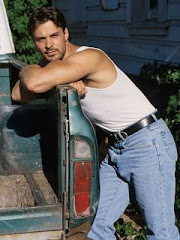
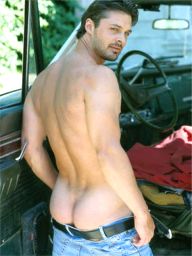
My apologies to Burt Bacharach for the punning title, but I couldn’t resist it. By way of recompense let me introduce you to the extremely studly Miguel Ángel Silvestre. I think you’ll agree he’s very easy on the eye, more about him soon!


Russ has long thought it would be a good idea for me to tell you about my life here in Spain, here’s his brief:
Most people who read the Blue Truck have never been to Spain - though they might like the music, kinda. (Hmm, there's a song in that somewhere.) It's always interesting to read a vivid description of a faraway place. Even if they have been there, it's likewise interesting to hear someone else's take on a place you already know well.

What color are the houses? How tall are Spaniards? Do they have discos, bowling alleys, freeways, pizza, fortune-tellers? You mentioned the other day the cubos or something, a small case of beer and its cost - now that was very interesting to know. Do you get a refund if you bring the box back to the store? And what does the beer taste like? Do you drink it cold or hot? Is it easy to be gay there, or do you have to hide it? I'm sure there are many everyday sights and sounds and things that are right in front of your nose, ordinary and familiar to you but strange and exotic to the rest of us that would make good reading.


. . . Next time get a yen to write, perhaps you will give us some descriptions of the place and say what led you to settle there, so far away from the Scepter'd Isle and a proper dish of tay?
So welcome to the first of what will hopefully be a series, a personal take on Spain and things Spanish, and perhaps along the way, we might look at some of my reasons for living here, so far away from that Scepter’d Isle . . . and get to answer some of Russ’ questions . . . bowling alleys, Bubba??

Partner and I first visited southern Spain some 35 years ago, and we determined then that it was the place we both wanted to retire to, which is exactly what we did 9 years ago this November. Undoubtedly one of the attractions all those years ago was that classic ‘Latin’ look of the young men, of which the aforementioned actor Miguel Ángel Silvestre is a perfect example.


Although I’m a sucker for the blond, blue-eyed beach-boy look, who can resist smouldering brown eyes, framed by thick black hair, olive-brown skin and a permanent five o’clock shadow to die for? Well not me obviously! Miguel Ángel is a very popular film and TV actor over here, made famous by his role as ‘El Duque’, a tale about the life of a drugs and crime baron, set in contemporary Madrid. But just like James Gandolfini’s characterisation of mobster Tony Soprano, he makes this monster a very human and believable person. He’s recently completed filming “I’m So Excited!” with Pedro Almodovar, so perhaps international stardom beckons, but for now he remains one of our better kept secrets. I noticed that in the interviews he gave in LA he used the word ‘adrenalin’ a lot; personally I think ‘testosterone’ would be better – woof!

It was April, and Partner had gone back to visit friends in the UK, so I decided to take a break too. The car was packed and with Lulu to keep me company, we headed for our favourite country retreat, a lovely rural hotel in the Subbética region of Andalucía.  


La Subbética lies at the heart of Andalucía - you can use this second map to follow my travels.


My drive is not a long one, a leisurely 3 hours if you take a long coffee stop, but it covers a wealth of differing landscapes and lifestyles within a short distance, and that is very typical of Spain itself, always something different. In Spain you soon learn to expect the unexpected; there is an anarchistic streak in the land and its people! I leave our home on the cosmopolitan coastal strip, the tourist trap that is known as the Costa del Sol, and soon I’m driving up through the steeply ridged mountains behind Malaga City. The road is a new one, it soars over the valleys on beautiful arched bridges and plunges deep through the mountains in sinuous tunnels.


And I’m completely alone. Not another car in sight. And why? Because this new road is a toll road, and Spanish drivers do not pay toll fees. They prefer to take the old road across the mountains, the one that follows the ancient sheep and goat trails. It’s tried, it’s trusted, and it’s free!

However, being alone on a Spanish road is no bad thing, for they are arguably the worst drivers in Europe. They have no fundamental rule of the road, no left and right, they simply drive down the middle, added to which they look no further than the end of their bonnet, if they are looking and not using their mobile phone that is! It’s the responsibility of other road users to guess where they are going, and act accordingly, not theirs. Providing you have enough rosaries, crucifixes and blessed virgins hanging from your driving mirror no harm will befall you, however badly you drive! Not being especially religious, partner and I have a fluffy stork hanging from the mirror in our Jag. We bought it in Extramadura, where the storks go to breed in the summer, and it seems to work almost as well as the religious icons! We call it ‘Storkie’.

This joke about traffic lights sums up the Spanish attitude to driving very well:
In cities they are a provocation, in the countryside they are an irritation, at Christmas time they are a decoration!
Within an hour I am passing the lovely old city of Antequera, with the spires and towers of its many churches reaching towards the sun above the surrounding streets and alleys.


Suddenly the mountains are behind me and the plain of Antequera stretches ahead. This plain – the Hoya de Antequera, is a wonderfully fertile basin surrounded on all sides by mountains. Rich farmland, ideal for cultivating grain, rice, sunflowers, and home to the sheep whose wool is still processed in the old city. But alas not for much longer. The powers that be have decided that this flat basin will make the perfect spot for a huge rail technology centre, a railway test-bed for the latest developments in high-speed rail travel. It will entail the loss of more than a quarter of a million acres of farmland, the expropriation of 712 farmsteads and small businesses.


Spain is justifiably proud of its position as the purveyor of some of the world’s fastest trains and technology. China, Saudi Arabia and the USA are just 3 of it’s customers for high-speed train systems. Undoubtedly the test centre will bring employment and create wealth and business opportunities, but the fertile land and existing economy will be lost. Believe me, there are plenty of flat, worthless areas in central Spain where such a centre could be swallowed up unnoticed, yet still create the jobs and wealth. This scheme, like so much in Spanish politics and big business today, smells of bribery and corruption.

Continued after the jump . . .

Why Marriage Matters: Nathaniel Frank

Crowds cheer the first same-sex couples to marry in Washington state
at the courthouse in Seattle, December 9, 2012.

Two very percipient quotes from scholar Nathaniel Frank, author of the 2009 book Unfriendly Fire: How the Gay Ban Undermines the Military and Weakens America - the first from Slate, "How Do Americans Really Feel About Gays?":
The whole point of a wedding, from a cultural perspective, is for a couple to invite their community to recognize and help enforce—indeed to approve of—their union as a positive thing worth supporting. There has always been something a bit disingenuous about gay rights activists insisting that they deserve marital recognition from their society because their relationships are nobody’s business but their own. Marriage is all about making your relationship other people’s business.
The second is from Huffington Post, "Why Other People's Marriages Are Our Business":
I first pondered this question on the evening of a friend's wedding when she told me what her marriage meant to her. "It's a way of enlisting my friends, family and community," she told me, "in supporting what will surely be a difficult set of commitments over time." Suddenly I realized the purpose of all the ritual and ceremony, the reason for the gifts and tears and witnesses: marriage is not just a private bond, but a public identity, whose meaning is shaped by the assumptions and practices of all those who claim and recognize its status. Being married helps us keep our commitments to our spouses and our communities by creating a shared identity with very public expectations. It doesn't always work. But every day thousands of people choose to embrace this identity because of the support it helps afford them. This is why gays need access to the very same institution of marriage--not civil unions--that straights enjoy: so they can join not just each other, but the wider community of committed people whose marriage is recognized, understood and championed by people across the world. And this is why separate is inherently unequal.

Some dismiss these ideas as lofty rhetoric either because marriage so often falls short of expectations or because their own beliefs are even loftier: they insist they don't need others' approval, and that marriage is only important because it grants legal benefits. "We don't need the state or anyone else," they say, "to affirm how much we love each other, or to help us keep our vows." At best, this has always seemed an adolescent view of marriage. Anyone who has ever had a wedding, who has mentioned her husband or wife in passing, or who has dreamed of one day getting married, knows this isn't true. And anyone who thinks clearly about the intersection of psychology and public policy should too. There is something about knowing that your community--and even the laws of the body politic--recognize and affirm commitments you've made, that can help you stand by them. It's a bit of Freudian internalization, in which the pesky knowledge that something's been publicly uttered somehow makes it both more true and more serious. It then becomes tougher to shirk off. It's the reason that we should care when someone tramples their public vows, including public figures like Ensign and Sanford. We should all raise an eyebrow. It's what Jonathan Rauch calls "stigma as social policy."

Read more gay-related articles by Frank here.


Friday, October 11, 2013

Waitin' for the Weekend


Wednesday, October 9, 2013

Geisha Girl

Your Head Trucker has no particular interest in Asian culture, but I found this well-made BBC documentary fascinating for the insight it gives into the mind of one Japanese girl who chooses to go the geisha route - and what a long, hard road it is.

Still, the film leaves some questions unanswered, the chief of which to my mind is - why? Why go through all that grueling discipline and hard work? What is the payoff big enough to compensate for losing a huge chunk of your childhood and your freedom - just to sit on your knees for hours every night playing parlor games with half-sloshed middle-aged businessmen? Bor-ring. Are they like really, really good tippers, or what is the deal there? See what you think, fellas:


Tuesday, October 8, 2013

Obamacare versus the Affordable Care Act


Honk to Wounded Bird.

The $200 Million Conspiracy to Shut Down the U.S. Government

Lucidly explained by Rachel and well worth your time, if you can stand the sheer horror of it:


Visit NBCNews.com for breaking news, world news, and news about the economy
Update, 2:20 p.m.: Andrew Sullivan, via Joe.My.God.:
There is effectively no Republican party any more. There is a radical movement to destroy the modern American state and eviscerate its institutions in favor of restoring a mythical, elysian, majority-white, nineteenth-century past. This crisis is proving that more powerfully than even watching Fox. We need to see what is in front of our nose: a cold civil war has broken out between those properly called conservatives, defending the credit of the government, empirical reality, and adjustments to modern life and those properly called radical reactionaries declaring our current elected president and Senate as illegitimate actors, bent on the destruction of America, and therefore necessitating total political warfare, even to the point of threatening to destroy the global economy.
Update, 8:30 p.m.: Obama says he's "not paying a ransom" to Republicans who are "out of touch with reality":


Monday, October 7, 2013

Marriage News Watch, 10/7/13

Matt Baume of the American Foundation for Equal Rights reports:


Related stories via Joe.My.God.:

Scalia doesn't care about his legacy on gay marriage, admits he gets most of his news from "talk radio guys"

Supreme Court declines to hear appeal seeking to recriminalize sodomy in Virginia

Mormon leader declares the church will never change its stand against gay marriage because "our policies are determined by the truths God has declared to be unchangeable"


Flag Desecration?

The good citizens of Mufreesboro, Tennessee, or some of them at least, are all het up over the display of a rainbow-striped flag at Middle Tennessee State University there. WTVF in Nashville reports:

NewsChannel5.com | Nashville News, Weather


Jesus mercy - we're still having this kind of argument in 2013.

I'd be willing to bet any amount of money, however, that those same upstanding patriots who are all hot and bothered over the rainbow would swear that the following is not a desecration of the American flag:

Demonstrators at the so-called Tax Day Revolt in Washington, D.C., in 2010, carrying 13-star American flags with a  prominent "II" in the middle of the circle, signifying a call for a "Second American Revolution" to overthrow the government of the United States - using the sacred right to own as many damn guns as you please, and as big as you please, enshrined in the Second Amendment.


Update, 10/8: The rainbow flag was stolen from the MTSU library display on Sunday, but campus cops tracked down the thief - a student - and returned the flag to the MT Lambda group on Tuesday.


Sunday, October 6, 2013

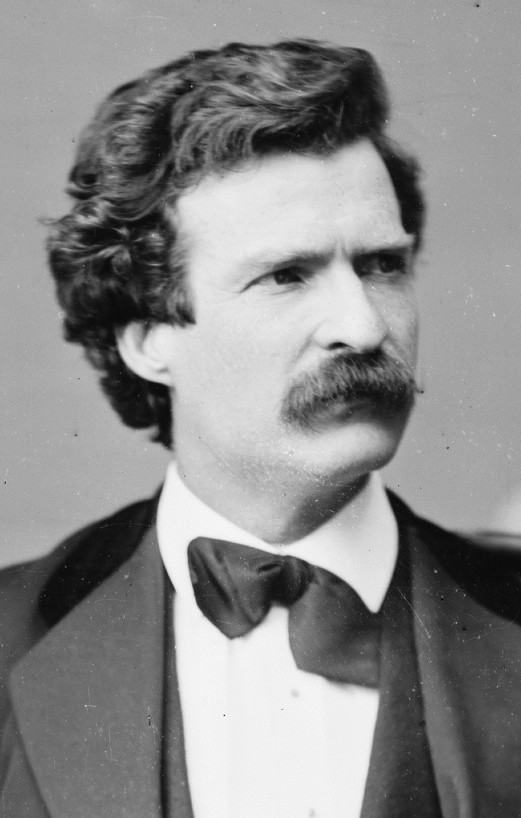
Today's Quote: Mark Twain


From The Autobiography of Mark Twain, a section of it written in 1877, published in 1958:

Click to enlarge.

For those of you who don't know, Mark Twain loved fried chicken, Scotch whisky, and cigars - and enjoyed them frequently and fully.  And died happily at 75, loaded with honors and the memory of a life well lived.


See this PBS Newshour video for more on Twain's remarkable autobiography, parts of which are yet to be printed.

Sunday Drive: Chopin, Étude Op. 10, No. 3


Saturday, October 5, 2013

It's Not Just a Political Fight - It's a Consitutional Crisis

Tea Partiers at the Capitol, 2011
Jonathan Chait writes a chillingly perceptive analysis of the constitutional crisis at the heart of the shutdown impasse - excerpt from New York Magazine:
Traditionally, when American politics encountered the problem of divided government— when, say, Nixon and Eisenhower encountered Democratic Congresses, or Bill Clinton a Republican one—one of two things happened. Either both sides found enough incentives to work together despite their differences, or there was what we used to recognize as the only alternative: gridlock. Gridlock is what most of us expected after the last election produced a Democratic president and Republican House. Washington would drudge on; it would be hard to get anything done, but also hard to undo anything. Days after the election, John Boehner, no doubt anticipating things would carry on as always, said, “Obamacare is the law of the land.”

Instead, to the slowly unfolding horror of the Obama administration and even some segments of the Republican Party, the GOP decided that the alternative to finding common ground with the president did not have to be mere gridlock. It could force the president to enact its agenda. In January, Boehner told his colleagues he’d abandon all policy negotiations with the White House. Later that spring, House Republicans extended the freeze-out to the Democratic-­majority Senate, which has since issued (as of press time) eighteen futile pleas for budget negotiations. Their plan has been to carry out their agenda by using what they call “leverage” or “forcing events” to threaten economic and social harm and thereby extract concessions from President Obama without needing to make any policy concessions in return. Paul Ryan offered the most candid admission of his party’s determined use of non-electoral power: “The reason this debt-limit fight is different is we don’t have an election around the corner where we feel we are going to win and fix it ourselves,” he said at the end of September. “We are stuck with this government another three years.”

Last Tuesday, House Republicans shut down the federal government, demanding that Obama abolish his health-care reform in a tactically reckless gamble that most of the party feared but could not prevent. More surreal, perhaps, were the conditions they issued in exchange for lifting the debt ceiling later this month. Lifting the debt ceiling, a vestigial ritual in which Congress votes to approve payment of the debts it has already incurred, is almost a symbolic event, except that not doing it would wreak unpredictable and possibly enormous worldwide economic havoc. (Obama’s Treasury Department has compared the impact of a debt breach to the failure of Lehman Brothers.) The hostage letter House Republicans released brimmed with megalomaniacal ambition. If he wanted to avoid economic ruin, Republicans said, Obama would submit to a delay of health-care reform, plus tax-rate cuts, enactment of offshore drilling, approval of the Keystone pipeline, deregulation of Wall Street, and Medicare cuts, to name but a few demands. Republicans hardly pretended to believe Obama would accede to the entire list (a set of demands that amounted to the retroactive election of Mitt Romney), but the hubris was startling in and of itself.

The debt ceiling turns out to be unexploded ordnance lying around the American form of government. Only custom or moral compunction stops the opposition party from using it to nullify the president’s powers, or, for that matter, the president from using it to nullify Congress’s. (Obama could, theoretically, threaten to veto a debt ceiling hike unless Congress attaches it to the creation of single-payer health insurance.) To weaponize the debt ceiling, you must be willing to inflict harm on millions of innocent people. It is a shockingly powerful self-destruct button built into our very system of government, but only useful for the most ideologically hardened or borderline sociopathic. But it turns out to be the perfect tool for the contemporary GOP: a party large enough to control a chamber of Congress yet too small to win the presidency, and infused with a dangerous, millenarian combination of overheated Randian paranoia and fully justified fear of adverse demographic trends. The only thing that limits the debt ceiling’s potency at the moment is the widespread suspicion that Boehner is too old school, too lacking in the Leninist will to power that fires his newer co-partisans, to actually carry out his threat. (He has suggested as much to some colleagues in private.) Boehner himself is thus the one weak link in the House Republicans’ ability to carry out a kind of rolling coup against the Obama administration. Unfortunately, Boehner’s control of his chamber is tenuous enough that, like the ailing monarch of a crumbling regime, it’s impossible to strike an agreement with him in full security it will be carried out.

In this context, it's also very informative to read the report just issued by Democracy Corps, entitled "Inside the GOP: Report on focus groups with Evangelical, Tea Party, and moderate Republicans." Read a short summary here, or the full report (pdf, 1.2 mb) here. Excerpts [edited by your Head Trucker to eliminate obvious typos]:
Unifying all Republicans is their revulsion toward big government. That revulsion involves three distinct strands of thinking – two of which take the Republican Party into realms of preoccupation that threaten to marginalize the party.

The first strand is big programs, spending, and regulations that undermine business. That is pretty straightforward and is hardly surprising. That is probably the dominant strand among the moderates who long for a fiscally conservative and focused Republican Party. . . . The second strand is a concern with intrusive government that invades their privacy, diminishes their rights and freedoms, and threatens the Constitution. Those worries are dominant among the Tea Party, though not exclusively. . . .

And the third is the most important and elicits the most passions among Evangelicals and Tea Party Republicans – that big government is meant to create rights and dependency and electoral support from mostly minorities who will reward the Democratic Party with their votes.

The Democratic Party [in their view] exists to create programs and dependency – the food stamp hammock, entitlements, the 47 percent. And on the horizon—comprehensive immigration reform and Obamacare. Citizenship for 12 million illegals and tens of millions getting free health care is the end of the road. These participants are very conscious of being white and valuing communities that are more likeminded; they freely describe these programs as meant to benefit minorities. This is about a Democratic Party expanding dependency among African Americans and Latinos, with electoral intent. . . .

Obamacare is the final blow. When Evangelicals talk about what is wrong in the country, Obamacare is first on their list and they see it as the embodiment of what is wrong in both the economy and American politics. In fact, when asked what she talks about most, one woman in Colorado replied, “Obamacare, hands down, around our house.” In Roanoke, it was the first thing mentioned when asked “what’s the hot topic in your world?” . . .

Evangelicals are a third of the Republican base; they are the biggest and most intense group: four-in-five are “strong” Republicans and straight ticket voters. Over three quarters are married and well over 90 percent are white. Their demographics – white, married, religious, and older – sets up a feeling that they are losing. They talk about how the dominant politics and cultures have encroached on their small towns, schools, and churches. What troubles them when they talk with friends, family, and fellow believers is Obamacare, guns, government encroachment, gay marriage, and “culture rot.” . . .

It used to be different, as illustrated by several men in Roanoke when describing their own towns.
It’s a little bubble. So everybody – it’s like a Lake Wobegon. Everybody is above average. Everybody is happy. Everybody is white. Everybody is middle class, whether or not they really are. Everybody looks that way. Everybody goes to the same pool. Everybody goes – there’s one library, one post office. Very homogenous. (Evangelical man, Roanoke)

And the point of departure for being a politically incorrect minority is what’s happening with the acceptance of homosexuality and the gay agenda.

Giving gay and lesbian citizens the right to marry the person they love can seriously harm them, and seriously harm the children that they are raising. (Evangelical man, Roanoke)

They’ve taken what I consider a religious union between a man and a woman – pardon my French – and bastardized it. (Evangelical man, Roanoke)

They believe the dominant national culture promotes homosexuality and makes this “minority” culturally “normal.” There is a conspiracy to push “the gay agenda.”

You see, fellas? Once again, it's all OUR fault. Of course.

You guys who don't live in a deep red state as I do should go read the whole report. It really lays bare the thinking of all these millions of your fellow citizens who are cheering as the government of the United States crumbles - the quotes could have been taken from any of my neighbors here out here on the prairie. It's not that modern culture is without flaws or above criticism - your Head Trucker has voiced his criticisms any number of times here in the Blue Truck -  but they seriously want to turn the clock back to a lily-white, straight-arrow, Bible-thumping, one-size-fits-all 1950 - and they will, too, if only they can find a way.

Just read it.  Before you wake up one morning to find yourself trapped in Mayberry.  Without a laugh track.


Related Posts with Thumbnails