Having obtained the statue, in 1914 Warren lent it to the Lewes town council, to be put on public display at the town hall. It is a lovely thing, isn't it?
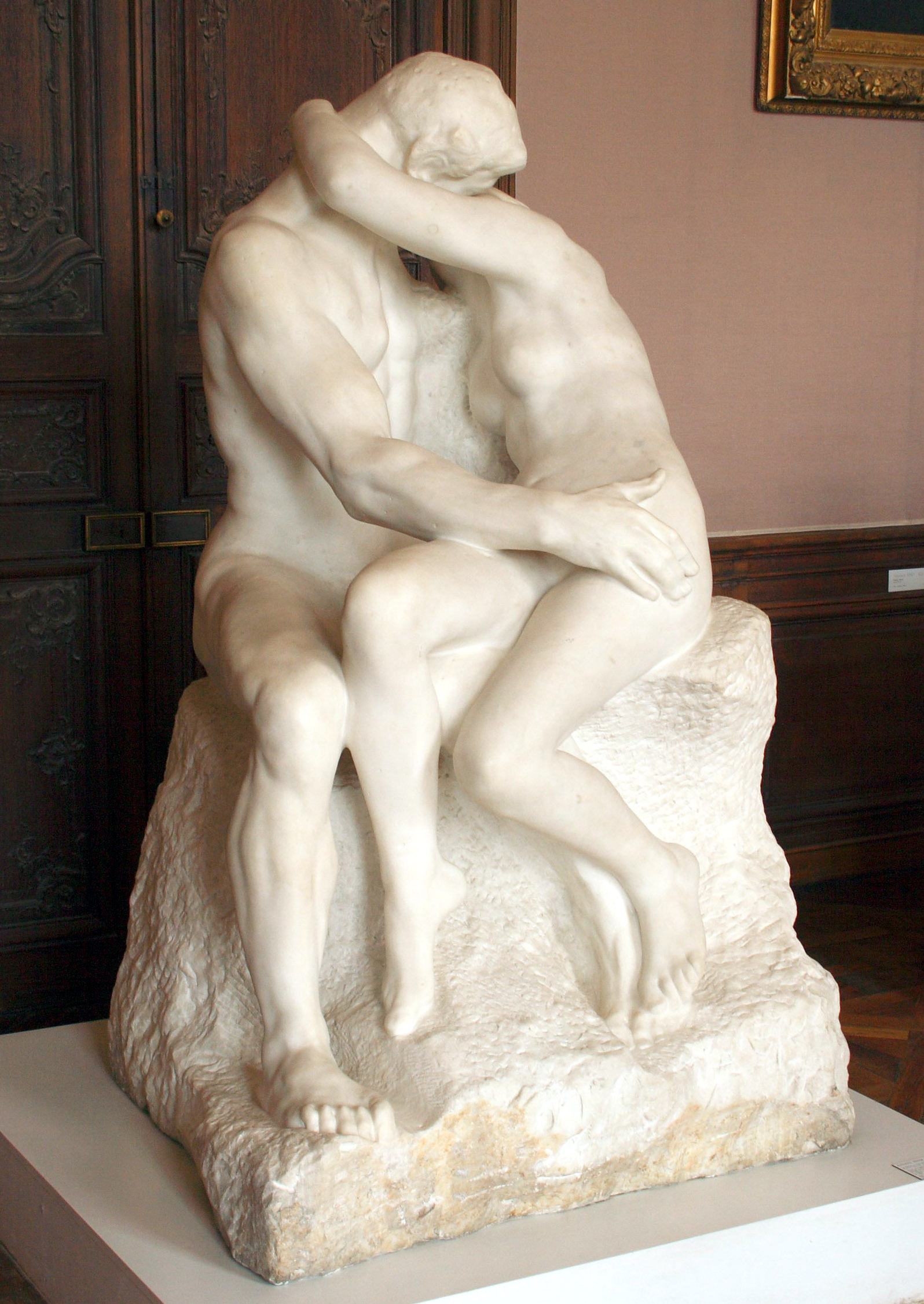
Oh but - Horrors! The local prudes were all up in arms, and managed to get the statue hidden away from public view. Musn't encourage that sort of thing, you know.
This much of the story I already knew most of. Tonight I was cheered to discover that Warren was also the owner of another work of fine art that bodes well to become even more famous than Rodin's - it is certainly more explicit, which you might expect from the collection of an artsy old queen, right?
In 1998, the British Museum paid £1.8 million for this other highlight from Warren's collection: a silver Roman drinking cup dating from about the year ten, supposedly found near Jerusalem and bought by Warren in 1911. Of course, for most of the twentieth century, such a frankly homoerotic piece of work could not be openly displayed or discussed at all; but now it is on permanent display at the British Museum.

Paul Roberts, curator of the British Museum:
To the Romans it was a drinking cup to be used not just admired. Picture a dinner party, course after course of exotic food and lots of fine wine. The guests talk about politics and love as they pass round the table this luxurious, tactile silver cup. Their host is delighted that they admire its decoration (and its value).
As a work of art it’s a masterpiece – its fine decoration achieved by beating the silver into shape from the inside using fine hammers and chisels. Luxuriant fabrics and musical instruments indicate a world heavily influenced by Greek culture, which the Romans admired and adopted.
So what is so special about the decoration that made it one of the British Museum’s highest-profile and most controversial acquisitions? What kept the piece out of permanent museum collections until 1999, and ensured that its purchase by the British Museum earned it a place in all the British media?
Continued after the jump . . .