C I V I L    M A R R I A G E    I S    A    C I V I L    R I G H T.

A N D N O W I T ' S T H E L A W O F T H E L A N D.


Showing posts with label what I believe. Show all posts

Saturday, April 16, 2011

What Does It Matter?


An old man walked across the beach until he came across a young boy throwing something into the breaking waves. Upon closer inspection, the old man could see that the boy was tossing stranded starfish from the sandy beach back into the ocean.

“What are you doing, young man?” He asked.

“If the starfish are still on the beach when the sun rises, they will die,” the boy answered.

“That is ridiculous. There are thousands of miles of beach and millions of starfish. It doesn’t matter how many you throw in; you can’t make a difference.”

“It matters to this one,” the boy said as he threw another starfish into the waves. “And it matters to this one.”


Honk to Porncake.

Sunday, August 22, 2010

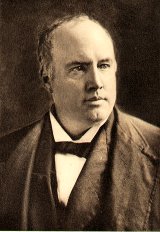
The Great Agnostic: Robert G. Ingersoll

Happiness is the only good.
The time to be happy is now.
The place to be happy is here.
The way to be happy is to help make others so.

Reason is the highest attribute of man.

The truth is, our government is not founded upon the rights of gods, but upon the rights of men. . . .  It is the only nation with which the gods have had nothing to do.

Argument cannot be answered with insults. Kindness is strength; anger blows out the lamp of the mind.

Happiness is the only good, reason the only torch, justice the only worship, humanity the only religion, and love the only priest.
The other day, while doing a little research on the history of divorce laws in this country - which just goes to show that the straight boys have been changing the rules of marriage all the time, just as they pleased - your Head Trucker happened to stumble upon this very interesting work:  Is Divorce Wrong? 

Written in 1889, it is a response to the question by three well-known public figures of the time:  Archibishop Cardinal Gibbons of Maryland, who naturally condemns the very idea out of hand, holding squarely to Roman Catholic teaching on the sanctity of marriage; Episcopal Bishop Henry C. Potter of New York, who as a good Anglican naturally waffles a good deal about it, pro and con; and finally Colonel Robert G. Ingersoll, known as "The Great Agnostic," who ringingly denounces the tyranny and injustice of religious precepts against divorce, which cause so much needless harm to innocent people, though at the same time very warmly and rather poetically defending the sanctity of marital love and the family home.

Somewhere along the line I had heard of Ingersoll's name before, but couldn't remember anything about him.  So a little further googling turned up the very interesting facts of his life, and his numerous speeches and writings, which you can browse through at your leisure if you have nothing better to do after brunch.  Many of which are quite good, and even amusing at times.  "The Most Remarkable American You Never Heard Of" - yes, and I can see why he was never, ever mentioned in the history books down here in the Bible Belt when I was a schoolboy.  Or if you don't have time for reading today, at least check out this video, I think you'll be amazed for one reason or another:

[For some strange reason, none of Ingersoll's videos will display here - how odd. But try this link for an overview of his life and work:]

What I Say:  Ingersoll was a man of great intelligence, and of great compassion for the human race.  It seems to me that he is a more outspoken proponent of Thomas Jefferson's famous vow of "eternal hostility to every form of tyranny over the human mind."  And I agree wholeheartedly with Ingersoll's great aim of removing the shackles of ignorance and superstition from the human race.  Quite an admirable man, who deserves to be better remembered than he is.

Yet from reading a few of his works, I think Ingersoll, in his zeal to bring light and freedom to his audiences, sometimes overstates his case - as all zealots do.  Just as Ingersoll inveighs against ever placing "unquestioning faith" in any scripture or supernatural authority, so your Head Trucker would offer a gentle warning against placing the same kind of blind faith in any one remark of Ingersoll's.  To take just one example, in one of his writings he heaps great scorn upon the book of Job and condemns it as essentially worthless.  Perhaps so, if you think it was written to be taken literally.  On the other hand, if you approach it as a work of fiction - moral fiction - to begin with, then you may take an entirely different view of its worth.

Continued after the jump . . .

Sunday, August 15, 2010

Sex, Lies, and Catholicism

Pope Benedict XVI and his private secretary Georg Ganswein arrive to lead a general audience dedicated to the altar servers in Saint Peter's Square at the Vatican on August 4, 2010. About 50,000 altar boys and altar girls coming from 17 countries gathered at the Vatican to attend the audience. The pope urged the young altar servers to follow the example of their patron saint Tarcisius a third century martyr. Pope Benedict XVI wears his red Saturn hat, named after the ringed planet Saturn. Photo by Eric Vandeville/ABACAPRESS.COM Photo via Newscom


Excerpt from a Sunday essay on the Pope's sexuality by the devoutly Catholic Andrew Sullivan, under the ironic title "The Pope Is Not Gay":
The choice between this kind of affirmation of spirituality and love and a politics of control and fear was what the church faced under John Paul II, as modernity pressed. . . . The pursuit of control is really a fear of scrutiny and transparency which, when added to the unspeakable crimes of the past, ineluctably led to the current meltdown in the West. The homosexual question is not in any way marginal to this; in fact, you could see it as a central challenge for a church caught between truth and power. . . .

It seems pretty obvious to me - as it does to Angelo Quattrochi, whose book is reviewed by Toibin - that the current Pope is a gay man (just as it was blindingly clear that John Paul II was straight). I am not claiming that Benedict is someone who has explored his sexuality, or has violated his own strictures on the matter. There is absolutely no evidence of that, or of hypocrisy of any sort. But that does not mean that he isn't gay. In fact, Ratzinger's command that gay priests should actively lie about their orientation makes any public statement about this on its face lacking in credibility. But when you look at the Pope's mental architecture (I've read a great deal of his writing over the last two decades) you do see that strong internal repression does make sense of his life and beliefs. At times, it seems to me, his gayness is almost wince-inducing. The prissy fastidiousness, the effeminate voice, the fixation on liturgy and ritual, and the over-the-top clothing accessories are one thing. But what resonates with me the most is a theology that seems crafted from solitary introspection into a perfect, abstract unity of belief. It is so perfect it reflects a life of withdrawal from the world of human relationship, rather than an interaction with it. Of course, this kind of work is not inherently homosexual; but I have known so many repressed gay men who can only live without severe pain in the world if they create a perfect abstraction of what it is, and what their role is in it. Toibin brilliantly explains this syndrome, why the church of old was so often such a siren call for gay men who could not handle their own nature. In Benedict, one sees a near-apotheosis of this type, what Quattrocchi describes as "simply the most repressed, imploded gay in the world." . . .

I would like to return to the world where this kind of speculation was disgraceful, unnecessary and blasphemous. But when this Pope has already enabled the rape of children, has covered up the crimes of many priests, when he has responded by blaming gay men for the moral failings of his own church, when he has publicly demanded that gay Catholics remain in the closet, i.e. lie about themselves as a sacred duty ... then such deference becomes much more difficult.
What I Say:  As a gay man, and an Episcopalian-on-hold, I understand the point Sullivan is making about being attracted to a spirituality supported by liturgy, ritual, and finery; in fact, as I've blogged in the past, I do think that the love of beauty - creating, revealing, sharing it in any of a myriad possible ways - is a defining element of the gay personality, which of course also comes in many shapes and sizes from silly twink to gruff leatherman.  But when you get past whatever the exterior may be, I think you find the same motive animating all of us at heart.

In contrast to our straight brothers, some of whom are very creative indeed and might take great delight in crafting pastries or growing roses - as did one very butch and very straight retired Marine captain I once knew.  Yet my hunch is that for them the beauty motive is a sideline, not the animating principle; seems to me that the heart of an unambiguously straight man is driven to build a metaphorical fort, not a house or a garden, as well as finding the means to knock down the other guy's fort.  In other words, aggression and domination, or to put it differently, the defender and the warrior, two sides of the same coin:  that's what makes them tick and sets their life agenda.

Continued after the jump . . .

Sunday, May 23, 2010

Faith and Reality

Crucifixion (Corpus Hypercubus) by Salvador Dali, 1954

Today I just had to swipe the painting - one of my great favorites - and this excerpt from Andrew Sullivan - also one of my great favorites, I guess you boys know - because both are so fitting, so apt, for where I am now:
Christianity is in crisis - and in a deeper crisis, in my view, than many Christians are allowing themselves to believe. I start from a simple premise. There can be no conflict between faith and truth. If what we believe in is not true, it is worth nothing. The idea that one should insincerely support religious faith because it is good for others or for society is, for me, a profound blasphemy if you do not share the faith yourself. I respect atheists and agnostics who reject faith; I find it harder to respect fundamentalists - of total papal or Biblical authority - because of the blindness of their sincerity; but I have no respect for those who cynically praise religion for its social uses, while believing in none of it themselves. . . .

No educated Christian today can deny that the scriptures we have - copies of translations of copies of copies of oral histories - are internally and collectively inconsistent, written by many authors, constructed in specific historical contexts, reflecting human biases, and supplemented by several other gospels that at the time claimed just as much authority as those gospels eventually selected by flawed men centuries later. Anyone who believes that the Holy Spirit automatically guides every church leader to the perfect truth at all times need only look at the current hierarchy to be disabused of such childish wish-fulfillment; or cast an eye on church history for more than a few minutes.

So the solid architecture of the faith we inherited has been exposed more thoroughly in the last few decades than ever before. There is no single authoritative text, written by one God, word for word true. There is a much more complicated series of writings designed by many men, doubtless under the guidance of the Holy Spirit, that help us see some form of the figure Jesus through languages and texts and memories. I think the character and message of Jesus are searingly clear and distinctive even taking into account that daunting veil through which we are asked to see. But we can only begin to see this once we have understood the veil that both obstructs and made possible our view.

The same, I think, is true of the papacy as an alternative to Biblical literalism. This is in some ways a more durable defense against logos than Biblical literalism, but it is just another form of fundamentalism, deploying total obedience to total authority as an alternative to a living faith that can both doubt and yet also practice the love of God and one's enemies, Jesus's core instructions. I do not see how the limits and flaws of such total authoritarianism could have been more thoroughly illuminated than in the recent sex abuse scandal. When the man whose authority rests on being the vicar of Christ on earth consigns children to rape rather than tarnish the image of the church, he simply has no moral authority left. Yes, his position deserves respect. But its claims to absolute authority have fallen prey to the human arc of what Lord Acton called "absolute corruption".

So we are left in search of this Jesus with a fast-burning candle in a constantly receding cave where we know that at some point, the darkness will envelop us entirely. We will catch Him at times; He will elude us at others. We will have to listen to many words he may have spoken before we can each discern the words he may have meant; we will have to keep our eyes and ears open for science's revelations about the world, while understanding that science is just one way of understanding the world and that poetry, history, and practical perspectives have things to tell us as well. The cathedral at Chartres; the long story of Christian debate and theology; the rituals and daily practices that help us stay trained to intuit the divine we cannot understand and the divine we do not always see in every face around us: these too tell us things that go beyond fact, archeology and hermeneutics.

Yes, this intellectual sifting is hard and troubling to faith; yes, it may end with more mystery than clarity. But if our faith is to be true, it must rest on something more than denial of reality. It must rest on being the greatest experience of reality.
I would add only this, and I think Sullivan would agree: the fact that in every age and every clime, in every culture and society, a certain percentage of people are born gay instead of straight; that it is not an illness, a mental disorder, a perversion, or a choice; that it is not the result of demonic influence or bad parenting; that it is as much a wholesome variety of nature, of the universe, as a red rose or a yellow one; that gay people are fully as capable of love and devotion, of self-sacrifice and service to the greater good as any straight person is; all this is part of reality also, which faith to be worthy of belief must acknowledge and value as it values all that is truly human.

Jesus - truly God and truly man - knows the reality of all things, and is reality, the ultimate fusion of spirit and flesh, divine and terrestrial, mortal and immortal, all that is or was or can be. Take it as theology or philosophy or poetry:  this I believe.

Sunday, November 8, 2009

Jesus, Gays, and Texans

Andrew Sullivan, a devout Catholic, has posted this today; the story's from a couple months back, but still pertinent:


MCC churches in North Texas have put slogans like these on billboards in the Dallas-Fort Worth area.  Which has annoyed the hell out of Bible-believing Christianists.  But perhaps it will make some people stop and examine what it is they really believe, and consider whether their thinking is consistent and compassionate, which is always a good thing.
Would Jesus discriminate?

The early church welcomed a gay man.

Jesus affirmed a gay couple.

Ruth loved Naomi as Adam loved Eve.

David loved Jonathan more than women.
Your Head Trucker spent many years reading and studying and researching the Scriptures on this point, looking desperately for a loophole, a window of hope that God loved me too.  And that search will run you crazy - and I do mean crazy - after a while.  Because that Bible was written down by straight men to serve their purposes and their view of the world and of God.

I don't have time today to go into all this deep subject.  And I don't want to step on anybody's toes, who have found a way to interpret the awful homophobic passages differently.  But it is true beyond any doubt that Jesus himself is not recorded as saying anything at all about same-sex love, one way or another.

And after many years of trying to reconcile the truths I was taught in church with the truth within me - the goodness and rightness of my own identity and feelings and nature - I finally came to realize that God, if God exists, is much bigger than the Church.  And much bigger than the Bible.

I haven't renounced my belief in Christ; I'm an Episcopalian-on-hold as I've explained before.  But to make a short conclusion, here's where I am now:  God is above all things and beyond all things; yet God is also very small and very close.  God is that light of goodness and peace inside you and me and everyone; anyone can be in touch with it, you don't need creeds and scriptures and rituals to find it, and you don't have to go searching in some holy place. 

It's already there inside you; and in a certain sense, you are the holy place yourself, the temple, as it were, of spirit.  And so am I, and so is every man and woman, though we can blind ourselves from perceiving it.

And that inner light is God, and God is Love.  It's important to pay attention to it, and not just our feelings and thoughts and bodies:  it's part of those things, but something else too.  More than that I can't say.  But that helps me. 

What helps you?

Sunday, November 1, 2009

Manners and Miracles

Andrew Sullivan quotes atheist Christopher Hitchens:
Usually, when I ask some Calvinist whether he is really a Calvinist (in the sense, say, of believing that I will end up in hell), there is a slight reluctance to say yes, and a slight wince from his congregation. I have come to the conclusion that this has something to do with the justly famed tradition of Southern hospitality: You can't very easily invite somebody to your church and then to supper and inform him that he's marked for perdition.
Well, no, of course not.  That would be rude.  Along with so many other things that damnyankees our friends from the frozen North just don't get about the South is that in these parts, rudeness is an even greater sin than atheism.  We learn that at our mothers' knees.

Atheism is very much the vogue now in the blue states, it seems; and believe me, I do get the why of that.  After half a century of living here, where old times are damn well not forgotten, and the terms Christian and American are considered to be exact synonyms - it's quite plain to me that religion as commonly practiced has very little to do with God, and everything to do with man.  And this conclusion is readily confirmed by even a cursory survey of other cultures, other peoples, from the earliest times down till now.

Though of course it's always easier to see the principle at work in other cultures, not our own.

And yet - and yet.  Despite all the evidence of humans fashioning God(s) in their own image, time and again - and despite all the evidence of an apparently indifferent universe - still, what the glib atheists overlook, like the glib religionists, is the evidence in their own hearts - a truth within that no microscope can ever reveal.

Feelings are not facts; I know this.  I'm talking about something that lies much deeper than the ebb and flow of emotion:  a Something that glows faintly at the end of the corridors of consciousness, a white pebble at the very bottom of a long, dark well.  Something I can perceive but not grasp, always there, still and patient and good.

And then beyond that, there are those few, those very few times in life where Something greater than me, and definitely not me, has directly intervened in my life, and effected a good result that I could not accomplish at all, myself.  I'm not talking about the cozy, cloying Jesus-came-and-sat-on-my-couch-and-talked-to-me kind of things you read in some silly religious magazines; nor am I talking about ecstatic visions or angels crashing through the ceiling.   That's so amateurish, so Hollywood.

No.  A miracle, when it happens, is the most ordinary thing in the world.  Seamless, smooth, and silent.  You are bumping along through the minutes of your life, this and that happening as usual, and then one time a certain thing happens, or doesn't happen.  That's all.  Though the effect, the result, is much to your benefit, or someone else's.

The most ordinary thing in the world.  As it should be.  One minute, standing in the familiar confines of your own kitchen, you reach your ladle into the jar and dip up a cup of water.  You turn around, and dip up another cup:  wine.  Just like that. 

No horns, no bells, no voices.  Just wine.  Just like that.

As you would expect, if you stopped and thought about it, from Someone to whom matter and time are simply draftsman's tools.  A master artist leaves no trace of his minor corrections.

Not an everyday occurrence, far from it.  And not something I can command, not hardly.  In my experience, these corrections, if you will, come only at the extremities of life, the moments of most desperate need, and not always then.  But sometimes they do come, invited or not.

None of which, I realize, will make the slightest sense to anyone who has not experienced the workings of a higher power.  Some atheists - such is the fallible human condition - are as shrill, as obnoxious, as some fundamentalists, and use evolution in exactly the same way that the other camp uses the Bible - as if that explains everything.  (Hint:  it doesn't; neither the one nor the other.)

And yet - this is not merely what I believe, but what I know from concrete experience.  Not meditation, not theorizing, not ecstasy - but cold, hard experience.  Like holding a pebble in my hand:  an unremarkable reality.  And yet from another point of view, quite remarkable and quite real.

There are myths, religious and otherwise, and some of them are lovely, and some of them are useful - for children and for adults.  And then when all the myths are said and done, there is still to be learned the incomprehensible, inexpressible reality of things unseen.  Something known to thoughtful, humble people throughout all times and in all lands.  Something far above and beyond all creeds, doctrines, and scriptures.

I don't know much, but I know that much.

Photo swiped, with apologies, from rayraydel at flickr

Sunday, January 11, 2009

Sunday Drive: The Unknown Road


My Lord God, I have no idea where I am going. I do not see the road ahead of me. I cannot know for certain where it will end. Nor do I really know myself, and the fact that I think that I am following your will does not mean that I am actually doing so. But I believe that the desire to please you does in fact please you. And I hope I have that desire in all that I am doing. I hope that I will never do anything apart from that desire. And I know that if I do this you will lead me by the right road though I may know nothing about it. Therefore will I trust you always though I may seem to be lost and in the shadow of death. I will not fear, for you are ever with me, and you will never leave me to face my perils alone.

--Thomas Merton, Thoughts in Solitude


(Honk to sufferthearrows)
Related Posts with Thumbnails