C I V I L    M A R R I A G E    I S    A    C I V I L    R I G H T.

A N D N O W I T ' S T H E L A W O F T H E L A N D.


Showing posts with label Lincoln. Show all posts

Saturday, September 11, 2021

The End of an Era


A U. S. Marine grieves at the memorial of a comrade killed in Afghanistan, 2012

Ben Rhodes, an American political commentator and former Deputy National Security Advisor to President Obama, writes in the Guardian:

Most importantly, the abandonment of Afghans to the Taliban, and Biden’s occasionally callous rhetoric laying the blame on Afghan security forces, who had fought on the frontlines for years, evoked a sense of national shame – even if that emotion should apply to the entirety of the war, and not simply its end. Indeed, in the chaotic days of withdrawal, the predominant concerns in US politics often had little to do with Afghans. The evacuation of Americans, the danger of Islamic State Khorasan Province, and the loss of US service members eclipsed the gargantuan Afghan suffering. Overwhelming public support for Biden’s decision, though undercut by dissatisfaction with the process of withdrawal, confirmed Biden’s core instinct: the thing most Americans agree upon is that we went to Afghanistan to take out the people who did 9/11 and prevent further attacks, and it was past time to abandon the broader aims of post-9/11 foreign policy, no matter the subsequent humanitarian cost.

In short, Biden’s decision exposed the cavernous gap between the national security establishment and the public, and forced a recognition that there is going to be no victory in a “war on terror” too infused with the trauma and triumphalism of the immediate post-9/11 moment. Like many Americans, I found myself simultaneously supporting the core decision to withdraw and shuddering at its execution and consequences. As someone who worked in national security, I have to recognise the limits of how the US can shape other countries through military intervention. As someone who has participated in American politics, I have to acknowledge that a country confronting virulent ethno-nationalism at home is ill-suited to build nations abroad. But as a human being, I have to confront how we let the Afghan people down, and how allies like Britain, who stood by us after 9/11, must feel in seeing how it all ended.

It is a cruel irony that this is the second time the US has lost interest in Afghanistan. The first time was in the 1990s, after much of the mujahideen we supported to defeat the Soviets evolved into dangerous extremists, plunged the country into civil war, and led to Taliban rule.

The final verdict on Biden’s decision will depend on whether the US can truly end the era that began with 9/11 – including the mindset that measures our credibility through the use of military force and pursues security through partnerships with autocrats. Can we learn from our history and forge a new approach to the rest of the world – one that is sustainable, consistent, and responsive to the people we set out to help; that prioritises existential issues like the fight against the climate crisis and genuine advocacy for the universal values America claims to support?

What I Say:  The twentieth anniversary of the 9/11 attacks, following close on the heels of the Afghanistan withdrawal, certainly does mark the end of an era - a nice, neat convenience for future history teachers - and the way forward is not at all clear.  The political divisions in this country have reached a horrendous frenzy now, exacerbated by the covid pandemic, that will not easily be tamped down.  There is a level of savagery and hysteria, not to mention widespread ignorance, arrogance, and sheer gullible superstition, on the tribal extremes of both the left and the right.

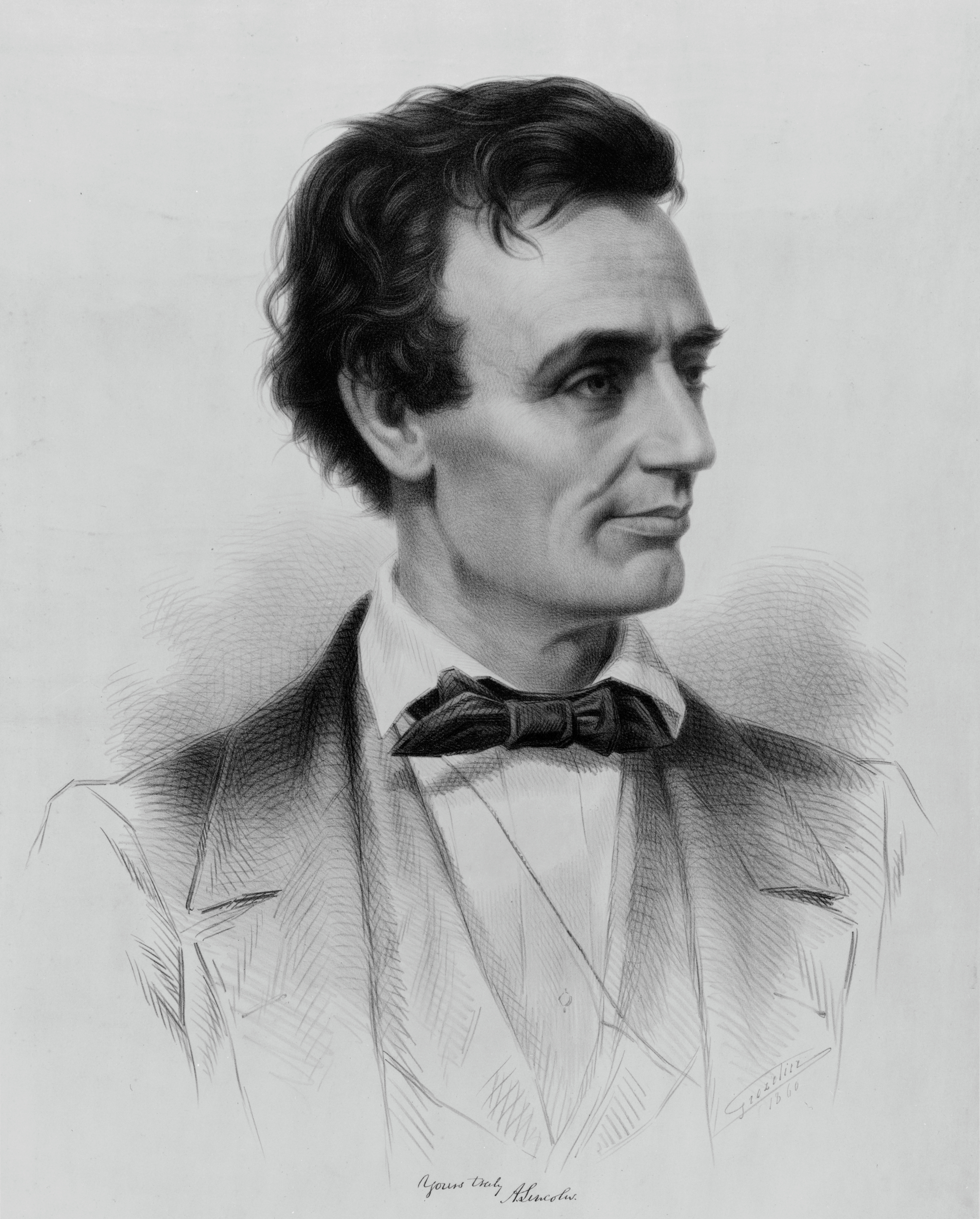
Before you start to contradict that last statement - was the anarchy at the Capitol on January 6th any more brutal than the nationwide anarchy that occurred last summer?  If you condemn the one, you must condemn the other.  In my view, both are equally nauseating and frightening, symptomatic of a dangerous, possibly fatal illness in the American body politic.  As Mr. Lincoln said - A house divided against itself cannot stand.  We have been warned.

As to foreign affairs, I hope all my truckbuddies will recall that the whole Afghan mess was the creation of the Bush-Cheney administration - and that Democrats criticized it from the very start, along with the shameful, senseless, needless war in Iraq that was based on Bush-Cheney's lies about non-existent "weapons of mass destruction."  It was necessary, and right by all standards of earthly justice, to hit back against the evil men who attacked our cities and mercilessly killed three thousand of our citizens on 9/11.  But it was not at all necessary to destroy two governments and colonize a Little America in the most inaccessible, inhospitable region on the other side of the world, at the cost of so many lives, so many dollars, and the respect and goodwill of nearly all the world.

Biden is responsible, as he himself has said repeatedly, for last month's frantic, shameful evacuation from Kabul - but we must remember that it was Bush-Cheney who dug us into that hole in the first place, against all reason and history and common sense, with glib Madison Avenue phrases like "regime change" and "nation building" - which are simply code for invasion, occupation, and control by a puppet government.  This has always been clear to those of us who had eyes to see it for what it was - Vietnam 2.0.  It was never about giving the Afghans what they wanted - it was all about giving them what we wanted for them.  And a cash cow beyond the wildest dreams of the military-industrial complex.

Continued after the jump . . .

Tuesday, November 19, 2013

The Address at Gettysburg

The Address as engraved on the wall of the Lincoln Memorial.

One hundred and fifty years ago today. An excerpt from the Ken Burns masterpiece, The Civil War:


Lincoln's last portrait photograph, February 5, 1865,
colorized by Sanna Dullaway for Time magazine.


Tuesday, November 6, 2012

Election Day


My internet modem went out last Thursday, which is why I haven't posted anything for four days - but I did get pretty damn good at playing Minesweeper.  I tell you what.   The Internet is no longer a luxury, but a necessity - like electricity, indoor plumbing, and microwave ovens.  Hell, these days with all the magazines disappearing, you can't even . . . oh, never mind.

Several calls to tech support later, I now have a new modem and am thankfully connected to the world again - just in time for the election. The polls are still too close for comfort, so your Head Trucker is keeping his fingers crossed until the official results are in. Here's Nate Silver's final chart from yesterday:


Looks good for our side, but - it ain't over till it's over. There's many a slip 'twixt the cup and lip, you know?

And if you live in one of The Four states where marriage is on the ballot, remember:


Honk to Joe.My.God. for the above images.

I'll post the election results when I get them, and maybe some other tidbits during the day. Ya know, it seems so strange that four years have gone by, whoosh, just like that. Seems like we just went through this whole election thing not very long ago. I can't believe how quickly the time has passed since then. My grandmother told me that the years go by quicker and quicker, the older you get. She was right.


Update #1: Nathan Rich, in an article about undecided voters, notes the striking contrast in spirit between this election and the last one:
I spoke to a different type of voter four years ago, when, two weeks before the 2008 election, energized by Barack Obama’s campaign, I joined several friends in Norfolk, Virginia, which is home to the largest naval base in the world. It was an ecstatic, optimistic time, and the Obama campaign offices were like college dorms—dozens, even hundreds of young volunteers passed through, not only canvassing but making phone calls, entering data, and determining strategy, subsisting on cold pizza and cold coffee. Upon arrival we were sent to some of the city’s poorest inner-city neighborhoods, composed almost entirely of black voters. We visited ramshackle, single family homes and vast concrete-and-brick housing projects; many of the people on our list had never voted before.

There were challenges, to be certain—because we were white, many people we met were convinced that we were spies for John McCain’s campaign, even though our arms were filled with brochures showing Obama’s face. Some well-meaning people, mostly older women, advised us to leave a neighborhood for our own safety. One group of teenagers drew me an intricate map of the route I’d have to follow in order not to stumble into the middle of a gang war. But over the course of a week we visited more than a thousand homes, speaking with hundreds of voters and, witnessing their enthusiasm, we became convinced that Obama would carry the state.

When I returned to Virginia to canvass last week, my friends and I went to Norfolk, excited to go back to the same neighborhoods we had visited in 2008. But the moment we entered the president’s local campaign office, we discovered how much had changed. We were informed by a campaign staffer that our services were not wanted. In fact there would be no canvassing for Obama during the week at all—and not only in Norfolk but in all of Virginia. Instead, all volunteers were asked to make phone calls to Obama’s most enthusiastic local supporters. The goal was to sign them up to canvass in the campaign’s final four days, beginning the Saturday before the election. We explained that we had not travelled considerable distances to Virginia only to make phone calls, which we could have done from our own living rooms. But the campaign would not budge. “I’m sorry,” said the young woman who greeted us in the Norfolk office, with a theatrical shrug. “I just work here.”

Here was the difference between 2012 and 2008. While the offices look the same—the young people making phone calls, the enervated chatter, the boxes of doughnuts—the underlying structure had been transformed. “I just work here.” This time around, the people in charge are not volunteers, but employees. Since 2010, when the Supreme Court overturned restrictions on private donations by corporations, the Obama campaign, flush with money, has increased its paid staff gigantically; there were three times as many employees in the Hampton Roads office as four years earlier. In 2008 the approach was politics from the ground up, by social network. This time, it was Obama, Inc., with strategy fixed at the highest level, by the campaign’s central headquarters in Chicago.


Update #2:   One more "yes we can" and a shout-out to the gays from the President's last campaign speech. Try to imagine what the gays would get mentioned for under the other party's regime.


Update #3: 14 Races for Gay and Trans People to Watch Today.


Update #4: From Andy Borowitz, "The Republicans' Closing Argument":
WASHINGTON (The Borowitz Report)—With only one day until the election, the Republican Party today released its official closing argument to the American people.

In its entirety, the argument read as follows: “We’re strongly opposed to FEMA and health care, but basically O.K. with rape.”

Reince Priebus, the chairman of the Republican National Committee, said that the Party’s message of “zero tolerance toward disaster relief combined with a more easygoing attitude about rape” would lead the Party to victory on Election Day.

“Our argument couldn’t be simpler: when God wants to create a hurricane or make a woman pregnant, big government should get out of the way,” he said.

The Party chairman said that the closing argument was part of its “expand the map” strategy: “We’re contesting every state, from Pennsylvania to Colorado to Iowa, where we believe there are voters who are in sync with our more advanced view of hurricanes and rape.”

Mr. Priebus also had this message for the American voter: “Your vote is important. We’ve spent billions trying to buy it.”

See also: "Romney Airdrops Two Billion in Small Bills over Ohio."


Update #5: Poll closings today, via Joe.My.God.:


Update #6: Via Andrew Sullivan, what this election all boils down to:
This is essentially a people's contest. On the side of the Union it is a struggle for maintaining in the world that form and substance of government whose leading object is to elevate the condition of men--to lift artificial weights from all shoulders, to clear the paths of laudable pursuit for all, to afford all an unfettered start and a fair chance, in the race of life. Yielding to partial and temporary departures from necessity, this is the leading object of the government for whose existence we contend.--Abraham Lincoln, Special Message to the People of the United States, July 4, 1861.


Update #7: Again via Sullivan, Nate Silver's projections as of 10 a.m. this morning.  Please God he is right.


Thursday, March 15, 2012

What's My Line?

Your Head Trucker fondly remembers this classy show from when it was still current.  A couple of clips here - the first one just takes my breath away, to think that this man actually was there in Ford's Theater that awful night - and lived to tell about it on television, for gosh sakes:


And then just for laughs, here's one of the more amusing examples of a guest whose occupation stumped the panel:


Thursday, January 26, 2012

The Past in Living Color


Sanna Dullaway, a Swedish artist, has made a speciality of very carefully colorizing old photographs of famous scenes and people. Here's a couple of breathtaking examples that bring famous faces to life again - click to enlarge.


More here.


Honk to David Mixner.

Saturday, November 6, 2010

150 Years Ago Today: Lincoln's Election


The New York Times is running Adam Goodheart's very interesting blog, Disunion, documenting day by day the Civil War period in this country, which was all set in train a century and a half ago by Abraham Lincoln's election.

In today's post, Goodheart makes a remarkable discovery:  though there are no photographs of Lincoln himself on Election Day, there are two dated photographs in the Library of Congress of a column being raised into place on the Capitol, then under extensive reconstruction.  Go check out the 1860 and 2010 comparison photographs that Goodheart has placed side by side:  most interesting.

History buffs should also be aware that Chapel Hill's Documenting the American South collection has a complete online edition of Mary Boykin Chesnut's famous A Diary from Dixie, which is truly fascinating reading.  Chesnut, a cultivated and insightful writer, was the wife of a Senator from South Carolina, and vividly recorded the political and personal triumphs and defeats of the Civil War years in her diary, which was first published in 1905.  Had she lived in today's world, I could easily see her as an Elizabeth Edwards type - though to her good fortune, Mary had a devoted, not a philandering, husband.

Here's Chesnut's very first diary entry, beginning with the first news of the election results:
CHARLESTON, S. C., November 8, 1860. - Yesterday on the train, just before we reached Fernandina, a woman called out: "That settles the hash." Tanny touched me on the shoulder and said: "Lincoln's elected." "How do you know?" "The man over there has a telegram."

The excitement was very great. Everybody was talking at the same time. One, a little more moved than the others, stood up and said despondently: "The die is cast; no more vain regrets; sad forebodings are useless; the stake is life or death." "Did you ever!" was the prevailing exclamation, and some one cried out: "Now that the black radical Republicans have the power I suppose they will Brown us all." No doubt of it.

I have always kept a journal after a fashion of my own, with dates and a line of poetry or prose, mere quotations, which I understood and no one else, and I have kept letters and extracts from the papers. From to-day forward I will tell the story in my own way. I now wish I had a chronicle of the two delightful and eventful years that have just passed. Those delights have fled and one's breath is taken away to think what events have since crowded in. Like the woman's record in her journal, we have had "earthquakes, as usual" - daily shocks.
What I Say:  As a native Southerner, with at least four great- or great-great-grandfathers who fought in the War, I could say many things here about history, identity, race, religion, and politics - and folly.

But for today, I'll say only that history keeps on repeating itself because we human beings are always the same inside, and unlike fashions in dress, speech, politics, and religion, human nature does not change. 

Millions of people, then as now, can be completely, thoroughly, unshakeably convinced that they are divinely right about any number of matters - when they are, in fact, tragically misinformed and misguided.

And notice that our ancestors didn't need a 24-hour propaganda cycle broadcast on television to be so damn foolish and so very ignorant of what is good and true.  It's just the long, sad story of mankind:  Us versus Them.

The more things change, the more they stay the same.

Friday, November 6, 2009

On Maine, Marriage, and Democracy

Okay, your Head Trucker got on a tear here tonight and couldn't stop.  I'm posting most of it after the jump to save space on this page, but maybe somebody will read it and let me know what you think.

I'm a little pooped tonight but hope I can string these quotes into a coherent post here.  It's important to understand were we are, where we've been, and where we're going.  And by we, I mean not only gays but all Americans.

Sullivan, quoting David Link, points out the victories this week we should not overlook.
Tuesday was a great day for gay rights everywhere but Maine:

We won voter approval of (1) domestic partnerships in Washington; (2) an anti-discrimination ordinance in Kalamazoo; (3) an openly gay city council president in Detroit; and (4) an openly lesbian mayoral candidate in Houston. That seems to say something about the state of anti-gay prejudice in this country.

I agree with David that public opinion is now decisively inclusive of gay people - on every issue but civil marriage. But even on that last issue, we are now essentially neck and neck in California and Maine, the last two states to have referendums on the matter, and we are over 50 percent in Washington state for domestic partnerships that are identical to civil marriage on a state level, but without the m-word.
 Conservative blogger Rod Dreher, though, says we are barking up the wrong tree:
Unless I'm missing something, in the 31 states in which voters had a say on whether or not gay marriage was going to be the law of the land, they all rejected it. Every single state. Even California, the national bellwether state on liberalizing social trends. Even Maine, in the most liberal region of the country.

You can come up with all kinds of theories about why this is, blaming the voters for being bigots, accuse the churches of playing dirty, whatever. The plain fact is, every single time it's been put to a popular vote (as opposed to allowing a tiny number of elites to vote on it), gay marriage has been a loser. . . .

If the pro-SSM left can't convince people of the rightness of their cause, they're perfectly prepared to see their views imposed from on high. Honestly, folks, I understand the case for same-sex marriage, though I don't agree with it, but look, if you're reduced to having to tell the public that they have no right to be consulted about the radical redefinition of a bedrock social and cultural institution, then you have a big, big problem.
Ah, but here is the crux of the matter.  As someone who grew up in the segregated South and remembers it vividly, I can tell you positively that the vast majority of Southerners forty years ago right now, probably 90-something percent in most places, would most certainly have considered segregation a "bedrock social and cultural institution" that absolutely had to be preserved.  The races had to be kept separate.  History, custom, law, and even scripture all showed the necessity of it.   Tamper with that, and the whole structure of society would collapse into anarchy and barbarism and racial warfare.  Seriously.

And besides, after all the fancy talk was done, it always, always, always came down to this remark, and with my own ears I heard it said many a time among the grown-ups:  Yes, but would you want one of them to marry your sister?  End of discussion.  Nothing could follow that unthinkable, utterly repugnant thought.  (Notice how often throughout history the great questions of the day come down to sex in the end.)

Read more of this post after the jump . . . .

Sunday, February 15, 2009

Sunday Drive: Lincoln's Faith

From an essay by Allen C. Guelzo, Director of Civil War Era Studies and the Henry R. Luce Professor of the Civil War Era at Pennsylvania’s Gettysburg College:

Abraham Lincoln, whose birthday is celebrated February 12, never kept a diary, and never lived to write an autobiography. He was so utterly private a man that even his best friends frequently admitted that there were regions of his mind to which they were never granted access. He was a “terribly reticent, secretive, shut mouth man,” said his law-partner of fourteen years, William Henry Herndon, “and close-minded as to his plans, wishes, hopes, and fears.”

That was particularly true about religion. “I don't know anything about Lincoln's Religion,” grumbled David Davis, Lincoln’s personal attorney and his first appointee to the U.S. Supreme Court, and “don’t think anybody knew.” . . .

Lincoln’s election to the presidency, just in time to see the country fall into civil war, presented him with a different set of challenges to his meager stock of religious belief. Lincoln expected a quick and direct restoration of the Union. But in battle after battle, the Union armies were handed humiliating defeats. The president could make no logical sense of this apparent contradiction of progress. After a year-and-a-half of seemingly fruitless bloodshed, he concluded that God had taken a direct hand in events to stymie the war’s progress so long as it was waged for purely political purposes, and to force Lincoln to recognize that the war must be turned in a moral direction that spoke directly to the crime of slavery.
This insight is what eventually drove Lincoln to depart from the policy direction with which he had begun the war, and to issue the Emancipation Proclamation. To the astonishment of his Cabinet, Lincoln explained that his decision to issue the Proclamation was a “vow” he had made “to myself, and...to my Maker.”

In his Second Inaugural Address, Lincoln came as close to preaching a sermon as any U.S. President has ever dared utter. The war, he said, was not a struggle between a righteous Union and evil slaveholders – both North and South had been complicit in the crime of slavery, and the war was a judgment that God had chosen to bring on the entire nation “until all the wealth piled by the bond-man’s two hundred and fifty years of unrequited toil shall be sunk, and every drop of blood drawn with the lash, shall be paid by another drawn with the sword.” Only by submitting to that national judgment, Lincoln told his audience, could “malice toward none” and “charity for all” follow.

Lincoln’s public role as president embodied a profound struggle to preserve a “government of the people” that nevertheless still respected a core of moral truth which not even “the people” could repeal. And in that role, he reminds us that religion is neither alien to public life (to be locked up in private) nor a jack-in-the-box (ready to jump into every situation). It is, instead, a reminder of the feebleness of our own wisdom, and of the costliness of truth.

Thursday, February 12, 2009

What Would Lincoln Do?

Excerpt from an essay by Evan Wolfson, director of Freedom to Marry, on HuffPo:

Abraham Lincoln may have been the first American to write about a same-sex couple getting married. His 1829 poem recounting the marriage of Nate and Billy was "perhaps the most explicit literary reference to actual homosexual relations in 19th century America." Lincoln's most important early biographer, William Herndon, initially included the poem in his Life of Lincoln, but as so often with gay subjects, it was subsequently omitted and largely ignored by later scholars.

Recently there has been greater willingness to debate evidence that our greatest president may himself have had same-sex attraction and even acted on it, as the iconic Lincoln biographer, Carl Sandburg, intimated in 1924 when he wrote of Lincoln's "streaks of lavender." In 2005, C.A. Tripp's Intimate World of Abraham Lincoln marshaled accounts of Lincoln's relations with men such as Captain David Derickson, including a November 1862 diary entry by the wife of the Assistant Secretary of the Navy that reads, "There is a Bucktail soldier here, devoted to the President, drives with him, and when Mrs. L is not home, sleeps with him. What stuff!" Like other scholars, Tripp explored Lincoln's singularly intimate relationship with Joshua Speed, who told Herndon, "If I had not been married & happy -- far more happy than I ever expected to be -- [Lincoln] would not have married."

But it's not because of Lincoln's sexual orientation or other "stuff" that February 12, Lincoln's birthday, has for 12 years now been the centerpiece of National Freedom to Marry Week. Lincoln's strongest connection to the freedom to marry cause lies in the values he embodied in his life, and embodies in ours. He was committed to equality, freedom, and lifting people up. He called Americans to the "better angels of our nature," and he combined a deep moral integrity with a determined and strategic focus on achieving what is most important and right.

In the wake of last November's Proposition 8 temporarily halting marriages in California, and with marriage equality shimmering within reach in other states such as New York and New Jersey, gay and non-gay people and organizations across the country will spend Freedom to Marry Week asking our fellow citizens to, in Lincoln's words, "think anew" about how exclusion from marriage harms gay families while helping no one. Freedom to Marry Week in this Lincoln bicentennial year recalls his admonition, "Those who deny freedom to others deserve it not for themselves."
Note from your Head Trucker: Nothing is proven about Lincoln's sexuality; read the Wikipedia article linked to the title of Tripp's book above for more insight into the speculations. I can testify from personal experience that bed sharing with a friend or relative - either male-male or female-female - was quite an ordinary custom in the Deep South well into my lifetime, if the necessity arose, and nobody thought a thing about it.

For one thing, people weren't nearly as affluent as they are nowadays; folks had much smaller houses and a lot less
stuff, including extra beds. For another thing, although people knew there was such a thing as homosexuality, and regarded it as the most perverted, detestable kind of sin, you never ever saw any homosexuals; nobody at all was "out." So the very strong default assumption was that everybody was straight, and thus not even tempted to get queer in the sheets. Nowadays, I suppose people think differently, but that's the way things were until the 1970's, at least.


The reality, of course, is that some people did have gay sex back in the day, but they would have been very, very careful to keep it covered up; to do otherwise would mean your family would disown you, your friends wouldn't speak to you, and you would be liable to be locked up in jail or sent off to an insane asylum. Homosexuality was, let's not forget, officially a sin, a crime, and a mental illness, and society was not at all slow to punish you for all three.

Despite all that, gay love did sometimes bloom in secret - go read up on all Walt Whitman's lovers, for gosh sakes - but even Whitman was ultra-discreet about his sexuality in public (notwithstanding the allusions in his poetry) all his life. It was a very different world, and all the stuff about Lincoln has to be taken in that context. I'd love to know that he was gay, or bi, but - it's all merely speculation yet.

Tuesday, November 18, 2008

Today's Quote: Obama, free the gays!

It doesn't take a Doris Kearns Goodwin to see that Barack Obama can go down in history as the president who brought gay rights to this country. He is in a position to pass ENDA and hate crime legislation, repeal DOMA, repeal DADT, and establish federal rights for our unions.

In summary, Barack Obama has the potential to be the Abraham Lincoln for gay people. Just as Lincoln freed the slaves, Obama (more or less a beneficiary of Lincoln's actions) is in the unique position to become known as the president who freed the gays.

Honk to Andoni over at Citizen Crain.
Related Posts with Thumbnails