-----
-----
-----
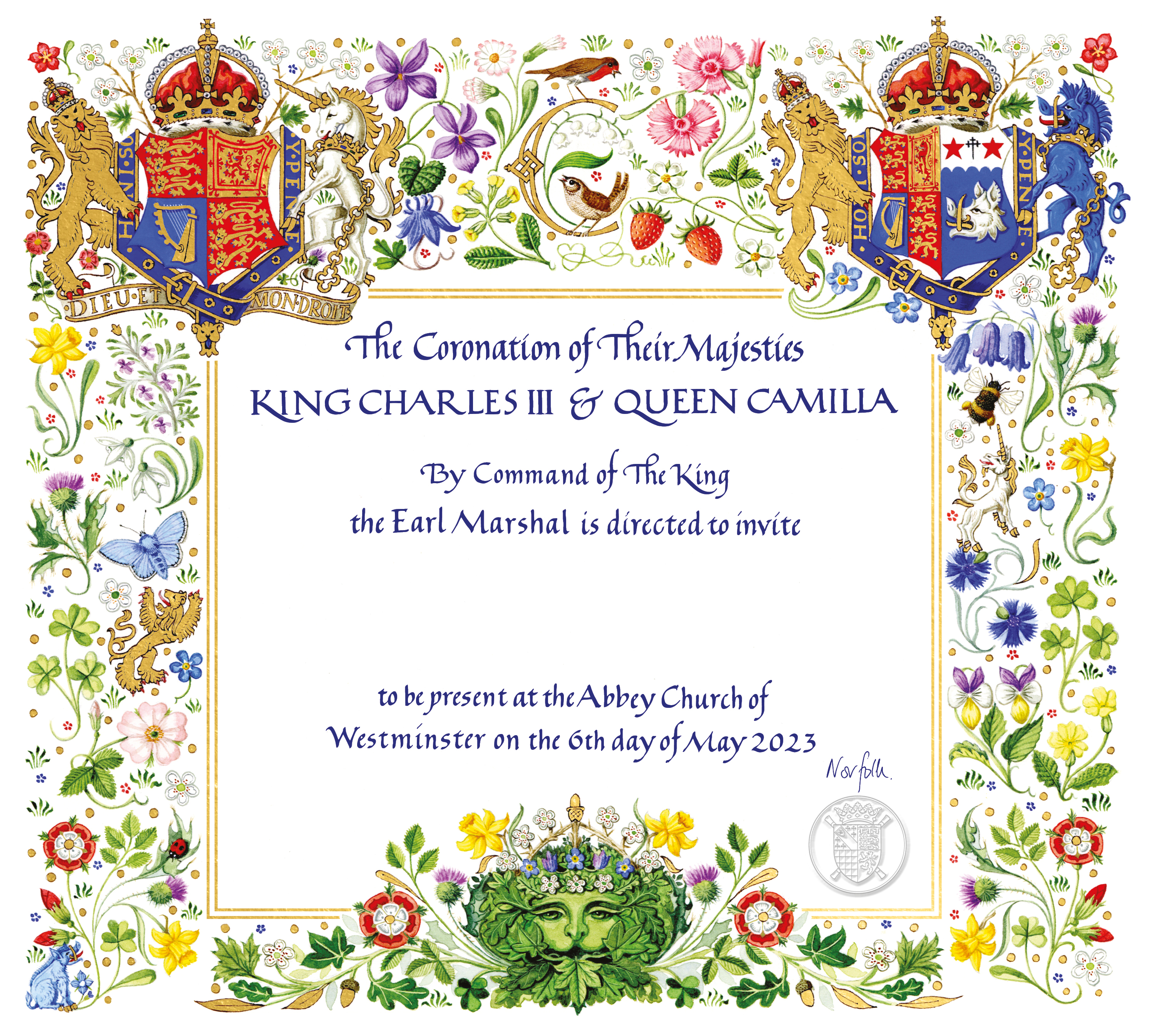
The invitations for the Coronation are splendid:
 |
| Click to enlarge. |
According to Buckingham Palace:
The invitation for the Coronation has been designed by Andrew Jamieson, a heraldic artist and manuscript illuminator whose work is inspired by the chivalric themes of Arthurian legend. Mr Jamieson is a Brother of the Art Workers’ Guild, of which The King is an Honorary Member.
The original artwork for the invitation was hand-painted in watercolour and gouache, and the design will be reproduced and printed on recycled card, with gold foil detailing. Central to the design is the motif of the Green Man, an ancient figure from British folklore, symbolic of spring and rebirth, to celebrate the new reign. The shape of the Green Man, crowned in natural foliage, is formed of leaves of oak, ivy and hawthorn, and the emblematic flowers of the United Kingdom.
As a help to my fellow Americans, those emblematic flowers are the Tudor rose for England, the thistle for Scotland, the shamrock for (Northern) Ireland, and the daffodil for Wales - though for some strange reason, the Welsh much prefer the humble, inartistic leek. Go figure.
More than 2,000 invited guests will attend the Coronation service on May 6 in Westminster Abbey.
Bonus: Your Head Trucker's spies - who are everywhere - have found evidence that the King himself as a wee lad of 4-and-a-half received an invitation to his royal mama's Coronation in 1953 - and isn't it marvelous:
 |
| Click to enlarge. |
 |
| Prince Charles at the 1953 Coronation, seated between his grandmama and Aunt Margaret. |
-----
.jpg) |
| Cristo crucificado, Digeo Velazquez, 1632. |
Holy and gracious Father: In your infinite love you made usfor yourself, and, when we had fallen into sin and becomesubject to evil and death, you, in your mercy, sent JesusChrist, your only and eternal Son, to share our humannature, to live and die as one of us, to reconcile us to you, theGod and Father of all.He stretched out his arms upon the cross, and offered himself,in obedience to your will, a perfect sacrifice for the wholeworld.
 |
| Ancient Greek rocker auditioning for Athenian Idol |
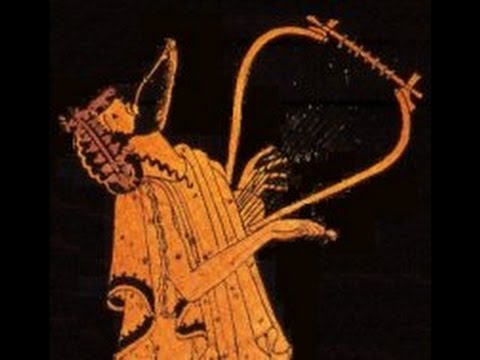 |
| Rockin' out! |
 |
| Apparently some kind of bagpipe player with a rather peculiar tether string |
 |
| Won't you take me to Funky Town? |
 |
| Party dude came home singing from the drinking contest, helped by his handy servant boy who holds up an empty wine jug for Papi to pee in. I'm not making this up. |
 |
| Old goat making his move on a handsome flute player - "Here, let me teach you how to blow it." |
.jpg) |
| Salvator Mundi, by Leonardo da Vinci (click to enlarge) |
 |
| From a "subway therapy" DIY art installation in New York City; see a gallery of other Post-it notes at The Guardian. |
 |
| Magnolia and Irises, Louis Comfort Tiffany, 1908. |
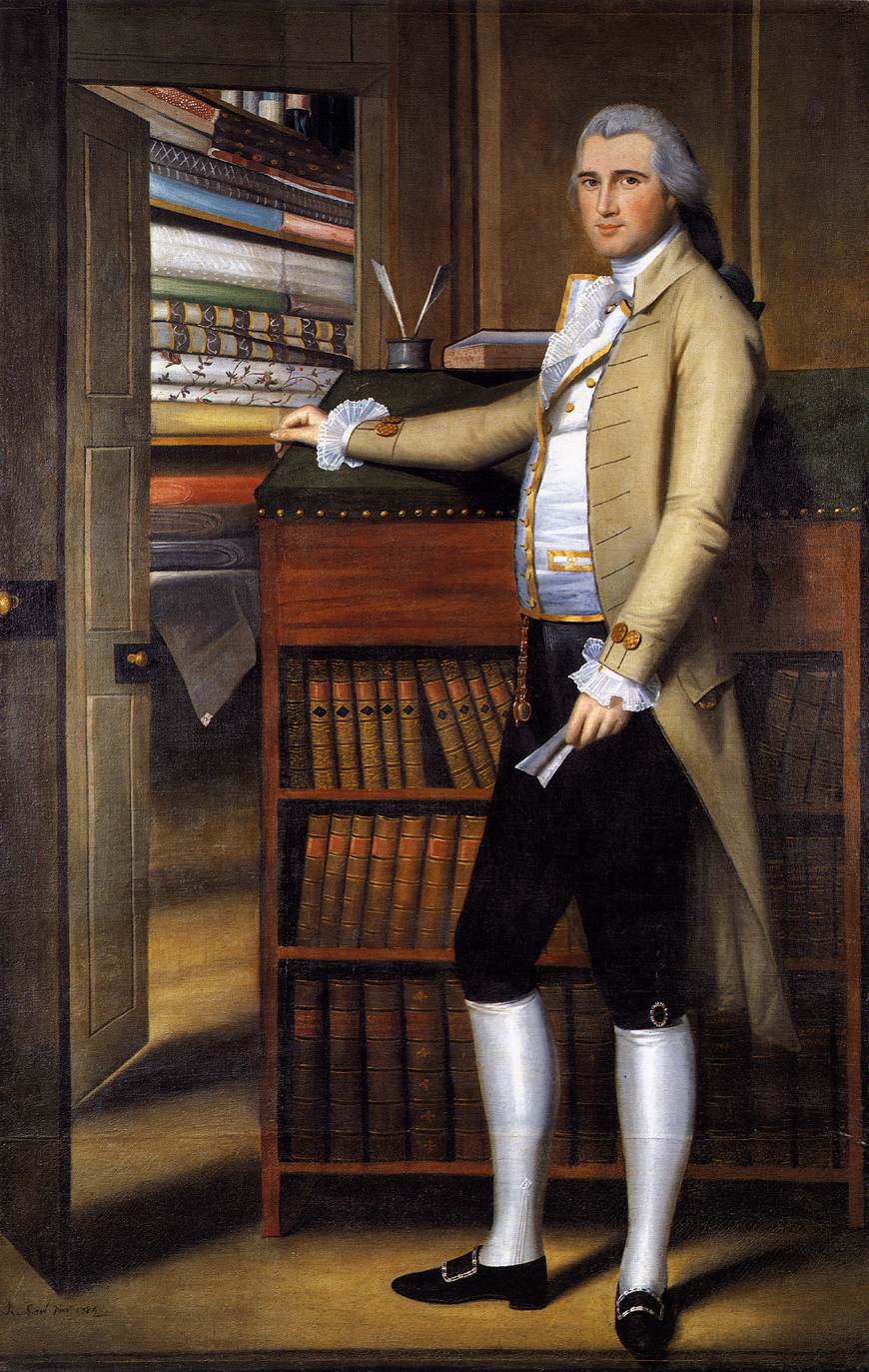 |
| Elijah Boardman, 1789, by Ralph Earl. Click to enlarge. |
This is the first major museum exhibition to focus on sexual difference in the making of modern American portraiture. “Hide/Seek” considers such themes as the role of sexual difference in depicting modern America; how artists explored the fluidity of sexuality and gender; how major themes in modern art—especially abstraction—were influenced by social marginalization; and how art reflected society’s evolving and changing attitudes toward sexuality, desire, and romantic attachment.
The exhibition begins with late nineteenth-century works by Thomas Eakins and John Singer Sargent and charts the twentieth century with major works by such American masters such as Romaine Brooks, Marsden Hartley, and Georgia O’Keeffe. The exhibition arcs through the postwar period with major paintings by Agnes Martin, David Hockney, Jasper Johns, and Andy Warhol. It continues through the end of the twentieth century with works by Keith Haring, AA Bronson, and Felix Gonzalez-Torres about life, love and death during the AIDS crisis, and charts the vigorous reassertion of lesbian and gay civil rights in the twenty-first.


 |
| "Madame X" by Claire B. Cotts |
 |
| 1925 cover by the magazine's art director, Rea Irvin, who based it on an 1834 portrait of Alfred, Comte d'Orsay, show below |

 |
| "Ode on a Grecian Tilley" by Michael Clayton |
 |
| "Tilleyangelo" by Tim Lemire |
 |
| "Tillo Marx" by Noah Diamond |
 |
| "A Dandy Map of New York" by Dave Hoerlein |